

Morning Routines of Highly Productive People 🌅 | Science-Backed Habits to Supercharge Your Day
Discover morning routines top performers swear by. Science-backed, actionable, and fun guide to start your day energized, focused, and ready to crush goals.

TL;DR
Want to wake up like Elon Musk, Oprah, or Tim Ferriss? 🚀 While none of us can literally clone their lifestyles, research-backed morning routines show that small, intentional habits can transform your energy, focus, and productivity.
Morning routines aren’t just trendy Instagram aesthetics—they’re biologically and psychologically powerful. Science shows that consistent early-morning habits:
- Boost cortisol and dopamine in a controlled way to kickstart your energy
- Improve cognitive function and memory for laser-sharp focus
- Reduce stress and decision fatigue by automating your first tasks
- Increase long-term productivity and mental clarity
By adopting routines that top performers use (without going full Elon Musk 100-hour-workweek), you can make your mornings smooth, energizing, and insanely productive. Think of it as hacking your body clock and brain chemistry, instead of hitting snooze for the fifth time.
Here’s what you’ll get from this guide:
- ✅ Daily habits you can implement immediately
- 🧠 Scientific reasoning behind each step
- ⚡ Quick hacks & real-life examples from actual high performers
In short: this isn’t just about waking up early—it’s about waking up right. By following these routines, your mornings will stop being a chaotic scramble and start being a launchpad for focus, energy, and accomplishment. 🌟
Introduction: Why Mornings Are Game-Changers 🌅
🎤 The Chaotic Morning Trap
Imagine this: your alarm blares at 6:30 a.m., and before you even open your eyes, you’ve hit snooze… three times. 😴 You finally crawl out of bed, stub your toe on laundry, spill coffee on your shirt, and frantically check emails. By 9 a.m., your energy is already depleted, focus is shot, and motivation feels like a distant memory. Sound familiar?
Now imagine a morning where you wake up calm, energized, and in control. ☀️ Where your first hour feels like rocket fuel for your brain and body, setting you up for high-focus work, creativity, and momentum all day. This isn’t magic—it’s the science-backed reality of elite performers, and once you know how they structure mornings, you’ll wonder why you ever tolerated chaos.
📊 Stats That Shock: Why Structured Mornings Are Non-Negotiable
Structured mornings aren’t a coincidence—they’re a repeatable pattern among the world’s most successful people. Think of it like a cheat code in real life: the early hours aren’t just “morning time,” they’re performance optimization windows.
Why Elite Performers Care About Mornings
Research consistently shows that top achievers leverage mornings intentionally. Here’s a quick snapshot:
| Statistic | Insight |
|---|---|
| ~90% of CEOs | Maintain a consistent, intentional morning routine, often the same every day, even on weekends. |
| High achievers’ behaviors | Early-morning exercise, reflection, meditation, and planning correlate with higher productivity and better emotional regulation. |
| Decision fatigue research | Most poor decisions happen later in the day when brain resources are depleted. Morning wins protect mental bandwidth. |
Morning Routines = Brain Chemistry Hack
Here’s the science behind why mornings matter more than caffeine alone:
- Decision Fatigue 🧠
Every choice drains mental energy. Jumping into work without a structured morning is like starting a video game on “hard mode” with no tutorial. Elite performers front-load their decision-making early—deciding priorities, outfit, breakfast, and first tasks—so they conserve brainpower for high-stakes work. - Cortisol Rhythm 🌅
Your body naturally spikes cortisol between 6–8 a.m., giving an energy boost. Ignoring this rhythm is like leaving a Tesla unplugged—your engine exists, but you’re not using it efficiently. By syncing habits with cortisol spikes, morning routines maximize alertness, focus, and readiness for the day. - Dopamine Micro-Wins ⚡
Small wins—making your bed, drinking water, journaling—trigger dopamine release, the brain’s motivation chemical. Elite performers use these micro-wins as momentum boosters, creating a chain reaction of energy, clarity, and focus.
Common Habits Among Top Performers
Here’s what the data says about what actually happens in those elite mornings:
- Exercise 🏋️ – Physical activity increases blood flow to the brain and primes energy levels.
- Reflection / Meditation 🧘 – Reduces stress, improves emotional regulation, and enhances creativity.
- Planning / Prioritization 📝 – Prevents decision fatigue and ensures first tasks align with high-impact goals.
- Healthy Breakfast / Hydration 🥑💧 – Fuels brain and body, reducing energy crashes.
- Digital Minimalism 📵 – Checking emails later prevents reactive stress and preserves focus.
The Takeaway
Morning routines aren’t just about discipline—they’re about strategically hacking your body and brain chemistry before the daily chaos hits. Successful people don’t stumble into productivity—they design it intentionally, stacking wins before the world even wakes up.
Think of it like a gamer modding their PC 🎮: every tweak, every system setup, every optimized routine is deliberate, designed for peak performance, and reproducible. The mornings aren’t magic—they’re science + habit + small wins stacked consistently.
By understanding these stats and the reasoning behind them, you’ll see why morning structure isn’t optional if you want consistent energy, focus, and productivity.
🧠 The Neuroscience Behind Winning Mornings


Mornings aren’t just convenient—they’re biologically optimized windows that your brain and body are wired to use. The elite performers we admire aren’t just disciplined; they hack their brain chemistry to gain energy, focus, and motivation before the day throws chaos at them. Let’s dive into the neuroscience behind why mornings are such a performance sweet spot.
1️⃣ Decision Fatigue: Protect Your Brainpower Early
Every decision you make burns mental energy, a phenomenon known as decision fatigue. Studies from social psychology and neuroscience show that our brains have limited willpower reserves, and each choice—big or small—reduces cognitive capacity.
A chaotic morning, full of reactive decisions like:
- “What should I wear?” 👔
- “Did I respond to that email?” 📧
- “Coffee or tea?” ☕
…already drains your mental energy before you start your real work.
Elite performers combat this by:
- Pre-planning outfits, meals, and priority tasks
- Automating repetitive choices (yes, even breakfast can be pre-decided)
- Completing small early wins to build momentum
Think of your morning like a battery charging session. Every unnecessary decision before 9 a.m. is a drain. Top performers maximize their charge before the world even wakes up.
2️⃣ Cortisol Rhythm: Your Body’s Natural Energy Spike 🌅
Your body isn’t random—it’s a biological machine. Cortisol, known as the “stress hormone,” has a natural rhythm called the cortisol awakening response (CAR). Typically, cortisol levels spike between 6–8 a.m., giving your body a natural alertness and energy boost.
| Cortisol Level | Effect on Body & Brain |
|---|---|
| Morning Spike (6–8 a.m.) | Increased alertness, focus, metabolic activation |
| Midday Plateau | Energy stabilizes, moderate focus |
| Evening Drop | Body preps for rest, low decision-making efficiency |
Using this spike intentionally can:
- Increase wakefulness and attention naturally
- Improve reaction time and cognitive function
- Amplify the effects of early exercise and exposure to natural light 🌞
Ignoring it is like ignoring a built-in energy boost—you waste your peak brainpower on chaos or unnecessary tasks.
3️⃣ Dopamine Micro-Wins: Fuel Motivation and Focus ⚡
Small morning wins trigger dopamine release, the neurotransmitter responsible for motivation, reward, and habit reinforcement. Even simple actions like:
- Making your bed 🛏️
- Drinking a glass of water 💧
- Journaling 5 minutes ✍️
…provide instant micro-rewards, creating a positive feedback loop. This early dopamine surge:
- Boosts motivation for more challenging tasks later
- Enhances focus and attention span
- Helps solidify habit formation
Elite performers know this intuitively: a few early, low-effort wins set the brain on “productive mode” for the entire day.
4️⃣ Morning Sweet Spot: Timing Is Everything ⏰
When you combine decision fatigue reduction, cortisol alignment, and dopamine micro-wins, mornings become a biological sweet spot for performance. Here’s a visual snapshot:
| Time | Biological Advantage | Suggested Action |
|---|---|---|
| 6:00–6:30 a.m. | Cortisol spike + high alertness | Hydrate, stretch, exposure to sunlight 🌞 |
| 6:30–7:00 a.m. | Decision fatigue low, dopamine ready | Small early wins: make bed, journal, quick tidy 🛏️✍️ |
| 7:00–8:00 a.m. | Motivation surge | Exercise, meditation, plan priorities 🏋️🧘📝 |
| 8:00–9:00 a.m. | Cognitive function high | Tackle high-focus work, creative tasks 💡💻 |
Stacking habits during this window leverages your brain’s natural chemistry, meaning you get more done with less perceived effort.
5️⃣ Practical Takeaways
- Front-load wins – Complete easy, intentional actions early.
- Automate decisions – Plan outfits, breakfast, and first tasks the night before.
- Move your body – Morning exercise amplifies cortisol’s alertness boost.
- Get sunlight – Light regulates circadian rhythm and stabilizes mood.
- Celebrate small victories – Dopamine is your productivity fuel; trigger it early.
🔑 Bottom Line
Mornings are prime biological real estate. By understanding decision fatigue, cortisol rhythms, and dopamine spikes, you can engineer a morning routine that sets the tone for your entire day. Elite performers aren’t just disciplined—they are strategic neuroscientists of their own routines.
Your mornings aren’t just a start—they’re a launchpad for focus, energy, and productivity. Stack small wins, ride your biology, and watch the chaos turn into controlled momentum. 🌟
🎯 Who This Guide Is For: Find Your Morning Persona 🌅


Mornings aren’t one-size-fits-all. The habits that work for a startup founder may feel like punishment for a student, and vice versa. But the science-backed principles—decision fatigue reduction, dopamine micro-wins, and cortisol rhythm alignment—apply to everyone. The key is matching habits to your life, energy patterns, and goals.
This guide is designed for anyone who’s ever felt:
- Morning chaos steals energy 😵
- Brain fog ruins focus ☁️
- Motivation evaporates before 9 a.m. 💨
Let’s break down who benefits most and how these principles fit into their lives.
1️⃣ Busy Professionals 💼
Challenges:
- Overloaded inboxes 📧
- Back-to-back meetings 🕘
- Pressure to perform and stay organized
Morning Pain Points:
- Running late or skipping breakfast
- Jumping into work reactively instead of proactively
- Mental energy drained before tackling high-priority tasks
Why Structured Mornings Help:
- Front-load decision-making with pre-planned outfits, meals, and schedules
- Trigger dopamine micro-wins with simple actions (make bed, prep coffee)
- Align work sessions with cortisol peak (6–8 a.m.) for optimal focus
Example Routine:
| Time | Action | Benefit |
|---|---|---|
| 6:00–6:30 | Hydrate + light stretch | Cortisol spike + blood flow |
| 6:30–7:00 | Quick journaling / priority list | Dopamine micro-win + mental clarity |
| 7:00–7:30 | Protein breakfast | Stable energy for morning tasks |
| 7:30–8:30 | High-focus work | Peak cognitive performance before meetings |
2️⃣ Students 🎓
Challenges:
- Early classes, tight deadlines, multiple assignments
- Energy dips mid-morning
- Constant notifications and distractions
Morning Pain Points:
- Oversleeping → rush & stress
- Low attention span during morning lectures or study sessions
- Procrastination spiral from chaotic start
Why Structured Mornings Help:
- Set consistent wake-up time to regulate circadian rhythm
- Use dopamine micro-wins (e.g., finishing a 10-min study prep task)
- Morning light exposure improves alertness and memory encoding
Example Routine:
| Time | Action | Benefit |
|---|---|---|
| 6:30 | Wake + drink water | Cortisol alignment + hydration |
| 6:40 | 10-min review / flashcards | Early dopamine boost + cognitive warmup |
| 7:00 | Quick workout / walk | Brain blood flow + energy |
| 7:30 | Healthy breakfast | Prevent mid-morning crash |
3️⃣ Entrepreneurs 🚀
Challenges:
- Endless decisions about product, marketing, finances
- High stakes and unpredictable schedules
- Mental fatigue from multitasking
Morning Pain Points:
- Reactive mornings = missed opportunities
- Energy wasted on trivial decisions
- Creativity suppressed by stress
Why Structured Mornings Help:
- Early priority-setting rituals reduce decision fatigue
- Exercise and reflection optimize cortisol and dopamine
- Morning clarity fuels strategic, high-value decisions
Example Routine:
| Time | Action | Benefit |
|---|---|---|
| 5:30–6:00 | Morning workout | Cortisol & dopamine optimization |
| 6:00–6:30 | Meditation / reflection | Reduces stress + enhances creativity |
| 6:30–7:00 | Goal review & action planning | Prioritizes high-value work |
| 7:00–8:00 | Deep work session | Peak focus & productivity |
4️⃣ Creatives 🎨
Challenges:
- Inspiration comes and goes
- Focus easily disrupted
- Work often project-based, not time-based
Morning Pain Points:
- Late starts = creativity blocked
- Brain fog hinders idea generation
- Emotional swings affect output
Why Structured Mornings Help:
- Morning rituals prime the brain for flow
- Dopamine micro-wins build early momentum for creative projects
- Exposure to natural light + exercise improves mood and focus
Example Routine:
| Time | Action | Benefit |
|---|---|---|
| 7:00 | Wake + hydrate | Aligns cortisol + energy spike |
| 7:10 | Freewriting / journaling | Early dopamine + idea warm-up |
| 7:30 | Light exercise | Blood flow to brain = creative boost |
| 8:00 | Work on priority creative task | Peak inspiration window |
🔑 Key Takeaways
- Morning structure isn’t optional – chaotic starts drain energy and focus.
- Science-backed principles work for everyone – cortisol, dopamine, and decision fatigue apply universally.
- Tailor habits to your persona – what works for a student may differ from a CEO, but the framework remains consistent.
- Micro-wins matter – small, intentional actions compound into massive energy and focus gains.
No matter your role, adopting a structured, intentional morning routine gives you control over your brain chemistry, energy, and day. The first hours aren’t just a start—they’re your secret productivity weapon. 🌟
🛣️ Mini-Roadmap: A 30-Day Morning Upgrade 🌅


Mornings aren’t about instant transformation or 5 a.m. bootcamps that leave you exhausted. 🚫 This is not a life-flip gimmick. Real, sustainable change comes from micro-wins, habit stacking, and momentum, applied consistently over time. Over the next 30 days, you’ll learn how to engineer your mornings to supercharge your energy, focus, and productivity, without feeling overwhelmed.
Why a 30-Day Approach Works
Human brains love consistency and small wins. Neuroscience shows:
- Habits take time to form—on average 21–66 days, depending on complexity
- Dopamine spikes from small wins reinforce behavior, creating a habit loop
- Stacking tiny wins compounds results, producing massive gains over time
Think of it like compounding interest, but for your brain and energy. Instead of trying to wake up at 5 a.m. and run a marathon on day one, you’ll build small, repeatable habits that grow into high-performance mornings.
The Core Philosophy: Micro-Wins + Habit Stacking
Micro-wins are tiny actions that create immediate motivation. Examples:
- Drinking a glass of water upon waking 💧
- Making your bed 🛏️
- Journaling for 5 minutes ✍️
- 5–10 minutes of light stretching 🏋️
Habit stacking is the method of linking new behaviors to existing ones. For instance:
- After brushing teeth → drink water 💧
- After making coffee → review your top 3 priorities for the day ☕📝
- After checking the weather → step outside for sunlight 🌞
Combining these two concepts allows small actions to compound, creating mornings that are intentionally structured yet effortless.
30-Day Roadmap Overview
The roadmap is divided into four 1-week blocks, each building on the previous. Micro-wins escalate gradually, habit stacking increases, and your mornings evolve from reactive to strategically intentional.
| Week | Focus | Key Habits & Wins |
|---|---|---|
| Week 1: Wake-Up & Hydrate | Start the day right | Consistent wake-up, water, sunlight exposure, light stretching |
| Week 2: Mind Clarity & Reflection | Mental setup | Journaling, meditation, priority list, mini-goal setting |
| Week 3: Energy & Movement | Body activation | 10–20 min exercise, balanced breakfast, posture/ergonomics check |
| Week 4: Focus & Deep Work | Launch productivity | First high-focus task, digital minimalism, flow window optimization |
By the end of 30 days, these blocks ensure that your body, mind, and environment are aligned for peak performance.
Week-by-Week Breakdown
Week 1: Wake-Up & Hydrate 💧
Goal: Sync your body with natural energy cycles
- Wake at consistent time ±15 minutes
- Drink 1 glass of water immediately
- Step outside or open blinds to absorb sunlight
- Light stretch to boost blood flow and cortisol utilization
Why it works: Cortisol peaks between 6–8 a.m., and hydration + movement allows you to capitalize on your natural alertness.
Week 2: Mind Clarity & Reflection 🧠
Goal: Train focus before distractions arrive
- 5–10 min journaling: gratitude or reflection
- 3-minute meditation or breathing exercise
- Write top 3 priorities for the day
- Optional: read a motivational or educational passage
Why it works: Early micro-wins trigger dopamine, reduce decision fatigue, and prepare your prefrontal cortex for high-level thinking.
Week 3: Energy & Movement 🏋️
Goal: Activate the body for sustained energy
- 10–20 min physical activity (yoga, walk, light workout)
- Balanced breakfast with protein + complex carbs 🥑🍳
- Posture and ergonomics check if working at a desk
- Stretching or mobility for flexibility and mental alertness
Why it works: Exercise boosts blood flow, endorphins, and brain-derived neurotrophic factor (BDNF), improving mood, cognition, and energy levels.
Week 4: Focus & Deep Work 💻
Goal: Launch your day with high-impact productivity
- Tackle highest-priority task first (the “MIT” approach – Most Important Task)
- Limit digital distractions for first 60–90 min
- Optional: Pomodoro or timed deep work sessions
- Evaluate wins and adjust habits nightly
Why it works: You align your biological prime time with strategic work, leveraging cortisol, dopamine, and low decision fatigue to achieve maximum output.
Key Takeaways
- Consistency beats intensity – small actions repeated daily are more powerful than huge, unsustainable changes.
- Micro-wins build momentum – early dopamine spikes create a chain reaction of motivation.
- Habit stacking creates effortless routines – your brain links new actions to existing habits, making them automatic.
- Science-backed timing matters – cortisol peaks, dopamine micro-rewards, and decision fatigue windows are leveraged naturally.
- 30 days = foundation – habits formed over this month are your launchpad for lifelong productivity and energy.
By following this 30-day roadmap, mornings stop being a chaotic scramble and become a launchpad for the day. 🌟 Small, consistent changes compound into sustainable energy, focus, and peak performance, turning every morning into a strategic, science-backed advantage.
3️⃣ The Science of Productivity Mornings 🌅🧠
Mornings aren’t just a societal preference—they’re a biological advantage. Elite performers, from CEOs to creatives, don’t rely on willpower alone—they leverage their biology, brain chemistry, and habits to maximize focus, energy, and mood. Let’s break down the science behind mornings, and how you can hack them for peak productivity.
⏰ Circadian Rhythm: Your Biological Clock 🕰️
Ever wondered why some mornings you feel unstoppable, while others drag on like a Monday marathon? The secret isn’t luck—it’s your circadian rhythm, your body’s 24-hour internal clock. This rhythm controls sleep, alertness, hormone release, and energy levels, essentially acting like your built-in productivity manager. Understanding it is the first step to hacking your mornings.
🌞 Cortisol Spike: Nature’s Morning Espresso
Between 6–8 a.m., your body naturally produces a cortisol spike—the hormone responsible for alertness, energy, and metabolic activation. Think of it as your biological coffee.
Why it matters:
- Boosts mental clarity and decision-making ability
- Elevates energy levels without caffeine
- Prepares your body for physical activity and cognitive tasks
Pro Tip: Step outside or open blinds during this window. Sunlight combined with cortisol = peak alertness mode activated.
🌙 Melatonin Drop: Wake-Up Without the Struggle
Melatonin, your sleep hormone, naturally decreases as daylight increases. Exposure to morning light reinforces this signal, syncing your internal clock and helping you wake up naturally.
- Less grogginess in the first hour
- Supports consistent sleep-wake cycles
- Improves mood and focus for the morning
Mini Challenge: Keep your bedroom dark at night and open blinds immediately after waking. This natural light triggers melatonin suppression and sets your circadian rhythm for the day. 🌞
🌡️ Body Temperature & Cognitive Peaks
Your circadian rhythm also influences body temperature, which in turn affects brain processing speed, memory recall, and reaction time.
| Time of Day | Body Temp | Cognitive Effect |
|---|---|---|
| Early Morning (6–9 a.m.) | Slightly rising | Memory recall, analytical thinking, alertness ↑ |
| Late Morning (9–11 a.m.) | Peak | Best time for focused work & problem-solving |
| Afternoon (1–4 p.m.) | Slight dip | Alertness decreases, mental fatigue sets in |
| Evening (7–10 p.m.) | Drops again | Creativity & reflection may peak, but focus ↓ |
Interactive Tip: Schedule your most demanding cognitive tasks during your cortisol + body temperature peak (6–11 a.m.). Save emails, meetings, or creative brainstorming for times when your rhythm is naturally lower.
🧬 Circadian Alignment Hacks
To fully optimize your morning based on your biological clock:
- Wake at consistent times – your body loves routine.
- Hydrate immediately – kickstarts metabolism and energy. 💧
- Step into sunlight – reinforces circadian rhythm and suppresses melatonin. 🌞
- Move your body – even 5–10 min stretches increase blood flow to the brain. 🏋️
- Avoid digital distractions first hour – let your brain leverage its natural alertness window. 📵
Pro Tip: Use habit stacking:
- After brushing teeth → drink water
- After opening blinds → 5-min stretch
- After stretching → journal or plan priorities
Stacking habits during your biological peak window makes routines automatic and reduces decision fatigue.
✅ Takeaway
Your biology is primed for peak performance in the first few hours of the day. By ignoring this natural rhythm, you’re essentially leaving energy, focus, and productivity on the table.
- Morning cortisol + sunlight = alertness & motivation
- Melatonin drop = natural, grogginess-free wakefulness
- Body temperature rise = peak cognitive function
Think of your circadian rhythm as a built-in cheat code. Use it intentionally, and mornings shift from a chaotic scramble into strategic, high-performance launch windows.
🧠 Neuroscience of Habits: How Your Brain Builds Momentum 🏗️

Habits aren’t just routines—they’re hardwired loops in your brain. Once formed, they run automatically, conserving energy and freeing up mental bandwidth for bigger decisions. Understanding the neuroscience behind habits explains why micro-wins and habit stacking work so effectively to supercharge mornings, productivity, and focus.
🔑 Keystone Habits: The Domino Effect of Success
Some habits are keystone habits—small actions that trigger a cascading series of positive changes across other areas of life. Elite performers don’t just focus on “being disciplined”; they focus on identifying keystone habits that naturally lead to better decisions and increased productivity.
Examples of Keystone Habits
| Habit | Positive Cascade |
|---|---|
| Making your bed 🛏️ | Promotes discipline, tidiness, and a sense of early accomplishment. Sets tone for the day. |
| Morning exercise 🏋️ | Boosts mood via endorphins, increases dopamine, improves energy, and primes the brain for focus. |
| Journaling ✍️ | Reduces stress, clarifies priorities, strengthens emotional regulation, and improves mental clarity. |
Why it works: The brain rewards completion of meaningful small actions. Early keystone habits trigger momentum, making it easier to stick to larger routines and tackle demanding tasks.
Mini Challenge: Identify one keystone habit that, if completed daily, would create the most “ripple effect” in your day. Even small wins matter. ⚡
🧩 Habit Stacking: Link for Effortless Routine
Habit stacking is the technique of attaching a new habit to an existing one, reducing friction and making adoption automatic. Instead of relying on willpower alone, your brain leverages existing neural pathways.
Habit Stacking Examples
| Existing Habit | New Habit | Benefit |
|---|---|---|
| Brushing teeth 🪥 | Drink a glass of water 💧 | Hydration becomes automatic |
| Making coffee ☕ | Review priorities ☕📝 | Prepares brain for focus & planning |
| Opening blinds 🌞 | 5-min stretch | Sunlight + movement = energy spike |
Pro Tip: Stack 1–2 new habits per week. Over time, the small actions compound into a morning routine that feels effortless.
Interactive Tip: Write down your current morning habits, then add one “stacked” micro-win per habit. You’ll be amazed at how quickly your morning transforms.
⚡ Dopamine Triggers: Motivation on Demand
Dopamine is the neurotransmitter of reward, motivation, and habit reinforcement. Completing a small action in the morning triggers dopamine release, which the brain interprets as “success.” This early surge of dopamine creates a momentum chain, making subsequent tasks easier and more enjoyable.
How Micro-Wins Fuel Dopamine
- Make the bed 🛏️ → small accomplishment triggers satisfaction
- Drink water 💧 → physical refresh + mental reward
- Journaling ✍️ → cognitive clarity triggers reward feedback
- Stretch or exercise 🏋️ → endorphins + dopamine = natural energy boost
Think of it like stacking coins: every micro-win adds to your motivation bank, which your brain uses to fund high-focus, demanding work later.
Pro Tip: Dopamine spikes are most effective when micro-wins are completed within the first 60–90 minutes after waking.
🧬 The Science Behind Why Habits Stick
- Neural Pathways Strengthen with Repetition – Every repeated action strengthens the neural pathway, making the behavior more automatic.
- Reward Loops Reinforce Behavior – Dopamine acts as the “positive feedback” that tells your brain, “Do this again.”
- Cue + Routine + Reward = Habit Loop – According to Charles Duhigg’s habit loop model:
- Cue: Wake up, brush teeth, or make coffee
- Routine: Linked habit (drink water, journal, stretch)
- Reward: Dopamine, satisfaction, or energy boost
Over time, this loop transforms effortful actions into automatic behaviors, freeing your prefrontal cortex for higher-level decision-making.
💡 Practical Morning Habit Hacks
- Start Small – Introduce one micro-win at a time; avoid overloading your brain.
- Pair New with Existing – Stack habits onto your already established routines.
- Visual Cues – Leave reminders for morning habits (water bottle, yoga mat, journal).
- Celebrate Micro-Wins – Acknowledge each completed habit to amplify dopamine.
- Track Progress – Use habit trackers or apps to see momentum accumulate.
Pro Tip: Habit stacking + dopamine micro-wins = effortless morning momentum. It’s like building a productivity superhighway instead of crawling through traffic. 🚀
✅ Takeaway
Habits are the foundation of productivity, focus, and energy. Understanding the neuroscience of habit formation lets you:
- Identify keystone habits that trigger cascading positive effects
- Use habit stacking to reduce friction and make routines automatic
- Leverage dopamine triggers to create early momentum for the day
The morning isn’t just a time—it’s your first opportunity to hack your brain. Build intentional habits, stack micro-wins, and watch focus, energy, and productivity compound naturally.
Mini Challenge: Choose one keystone habit and one habit stack to implement tomorrow morning. Track your dopamine micro-wins and notice the difference by the end of the week. ⚡
Dopamine Triggers
Small morning wins release dopamine, the neurotransmitter responsible for motivation and habit reinforcement. Dopamine spikes early create a momentum chain that fuels focus throughout the day. ⚡
Evidence-Based Benefits of Key Morning Habits
Science isn’t opinion—it’s measurable. Here’s what research shows about high-performance morning habits:
| Habit | Scientific Benefit | Study / Reference | Suggested Time |
|---|---|---|---|
| Morning Exercise 🏋️ | Increases dopamine, energy, and blood flow to the brain | Frontiers in Psychology, 2021 | 20–30 min |
| Journaling ✍️ | Reduces anxiety, improves focus, enhances emotional regulation | Journal of Clinical Psychology, 2018 | 10 min |
| Cold Shower ❄️ | Increases alertness, activates sympathetic nervous system | Medical Hypotheses, 2016 | 5 min |
| Meditation / Mindfulness 🧘 | Lowers cortisol, improves attention & mood | Mindfulness, 2015 | 5–15 min |
| Exposure to Sunlight 🌞 | Synchronizes circadian rhythm, boosts serotonin | Sleep Medicine Reviews, 2020 | 10 min |
| Protein-Rich Breakfast 🥑🍳 | Stabilizes blood sugar, enhances cognitive performance | Nutrients, 2019 | 15 min |
Morning Exercise
- Boosts dopamine and endorphins, enhancing mood and motivation
- Increases brain-derived neurotrophic factor (BDNF) → supports learning and focus
- Short routines (20–30 min) are enough to see measurable cognitive and emotional benefits
Journaling
- 5–10 min of reflection reduces anxiety and rumination
- Improves goal clarity and task prioritization
- Activates prefrontal cortex → enhances executive function and decision-making
Cold Showers
- Activates sympathetic nervous system, increasing alertness
- May improve resilience to stress
- Stimulates endorphins → immediate mood boost
Meditation / Mindfulness
- Reduces cortisol, improving stress resilience
- Enhances attention and focus → fewer distractions during work
- 5–15 min is sufficient to see measurable brain changes (grey matter, connectivity)
Exposure to Sunlight
- Morning light synchronizes circadian rhythm → easier waking, better sleep quality
- Boosts serotonin → mood regulation
- Supports vitamin D synthesis → overall health and immunity
Protein-Rich Breakfast
- Provides sustained energy → prevents mid-morning crashes
- Improves cognitive performance and memory recall
- Supports neurotransmitter synthesis → better focus and alertness
How These Habits Work Together
The magic isn’t just in the individual habits—it’s in combining them strategically. For example:
- Drink water + open blinds → hydrate & get sunlight → cortisol and circadian alignment 🌞💧
- 20-min workout → dopamine + BDNF → energy + focus 🏋️
- 5-min journaling → micro-wins + mental clarity ✍️
- Protein breakfast → sustained fuel for deep work 🥑🍳
Stacking these habits creates a synergistic effect: you’re not just awake, you’re alert, motivated, and ready to tackle high-priority tasks with minimal decision fatigue.
Practical Implementation Tips
- Start Small – Don’t attempt every habit at once. Introduce 1–2 per week.
- Time Block – Assign approximate windows: e.g., 6:30–7:00 exercise, 7:00–7:10 journaling.
- Track Wins – Use a habit tracker or journal to log micro-wins; dopamine reinforcement is powerful.
- Adjust & Iterate – Personalize timing based on chronotype (morning lark vs night owl).
- Celebrate Micro-Wins – Recognize each small habit as a moment of victory, compounding motivation.
🔑 Bottom Line
The science of productivity mornings shows that elite performers are successful not because they wake up early, but because they hack biology and psychology. By understanding:
- Circadian rhythm (cortisol & melatonin)
- Neuroscience of habits (keystone habits, stacking, dopamine triggers)
- Evidence-based benefits of exercise, journaling, cold showers, meditation, and sunlight
…you can engineer mornings that maximize energy, focus, and mood, turning the first hours of your day into a launchpad for productivity.
Morning routines aren’t arbitrary—they’re a performance system, backed by biology, psychology, and real-world results. 🌟
🔬 Evidence-Based Benefits of Key Morning Habits 🌅
Mornings aren’t just a social construct—they’re an opportunity to hack your biology. Elite performers don’t rely on luck or sheer willpower; they rely on science-backed routines that optimize energy, focus, and mood. Let’s break down the key habits and why they actually work, according to research.
🏋️ Morning Exercise: Energize Your Brain and Body
Exercise isn’t just for aesthetics—it’s a cognitive and emotional supercharger.
- Scientific Benefit: Increases dopamine, boosts energy, and improves blood flow to the brain.
- Evidence: Frontiers in Psychology, 2021 found that morning workouts improve motivation, alertness, and executive function.
- Suggested Time: 20–30 minutes
Why it works: Physical activity increases brain-derived neurotrophic factor (BDNF), which supports learning, memory, and focus. Even 10–15 minutes of stretching or light cardio kickstarts your nervous system.
Pro Tip: Combine exercise with sunlight exposure for an instant energy and mood boost. 🌞
✍️ Journaling: Clear the Mental Fog
Journaling isn’t just self-expression—it’s a tool for mental clarity and stress reduction.
- Scientific Benefit: Reduces anxiety, improves focus, and enhances emotional regulation.
- Evidence: Journal of Clinical Psychology, 2018 showed that even 5–10 minutes of structured journaling reduces rumination and improves cognitive function.
- Suggested Time: 10 minutes
How to do it:
- Write down 3 things you’re grateful for
- List top priorities for the day
- Note any mental clutter or worries
Why it works: Journaling creates a dopamine micro-win, signaling your brain that the day is structured and under control.
❄️ Cold Showers: Alertness Boost on Demand


Cold showers aren’t torture—they’re a neuroscience-approved energy hack.
- Scientific Benefit: Increases alertness, stimulates sympathetic nervous system, and improves resilience to stress.
- Evidence: Medical Hypotheses, 2016 reports that cold exposure triggers adrenaline release, enhancing focus and alertness.
- Suggested Time: 5 minutes
Pro Tip: Start with warm water, finish with 30–60 seconds of cold. Pair it with deep breathing for maximum dopamine spike and mental clarity. ⚡
🧘 Meditation / Mindfulness: Calm and Focused
Meditation isn’t only for monks—it’s a brain optimization tool backed by neuroscience.
- Scientific Benefit: Lowers cortisol, improves attention, enhances mood.
- Evidence: Mindfulness, 2015 demonstrates that 5–15 minutes of morning meditation reduces stress and improves cognitive control.
- Suggested Time: 5–15 minutes
How to do it:
- Sit quietly, focus on your breath
- Use guided apps if needed (Headspace, Calm)
- Try body scan or 5-count breathing
Bonus: Meditation early in the morning primes your brain for flow, making tasks later in the day feel easier and less stressful.
🌞 Exposure to Sunlight: Nature’s Productivity Hack


Natural light is a biological cue that your brain responds to instantly.
- Scientific Benefit: Synchronizes circadian rhythm, boosts serotonin, and regulates sleep-wake cycles.
- Evidence: Sleep Medicine Reviews, 2020 found that 10 minutes of morning sunlight improves mood, alertness, and sleep quality.
- Suggested Time: 10 minutes
How to do it:
- Step outside after waking
- Open blinds or curtains if outdoor access is limited
- Combine with morning walk or stretches for double benefit
Why it works: Sunlight suppresses melatonin, activates dopamine pathways, and aligns your internal clock for optimal energy and focus.
🥑🍳 Protein-Rich Breakfast: Fuel Your Brain
Breakfast isn’t just a meal—it’s a cognitive launchpad.
- Scientific Benefit: Stabilizes blood sugar, enhances cognitive performance, and supports neurotransmitter synthesis.
- Evidence: Nutrients, 2019 shows that protein-rich breakfasts improve attention, memory, and mood throughout the morning.
- Suggested Time: 15 minutes
Ideas for fast, effective breakfasts:
- Eggs + avocado + whole-grain toast
- Greek yogurt with berries and nuts
- Protein smoothie with spinach, banana, and protein powder
Pro Tip: Pair breakfast with hydration and sunlight to maximize energy and focus. 💧🌞
🔄 How to Stack These Habits
Combining these habits isn’t just additive—it’s synergistic. Here’s an example of a science-backed morning stack:
| Time | Habit | Benefit |
|---|---|---|
| 6:30 | Hydrate & step into sunlight 💧🌞 | Cortisol alignment + alertness |
| 6:35 | 20-min workout 🏋️ | Dopamine + BDNF spike |
| 6:55 | 5-min cold shower ❄️ | Alertness boost + resilience |
| 7:00 | 10-min journaling ✍️ | Mental clarity + micro-wins |
| 7:10 | 5–10 min meditation 🧘 | Reduce cortisol + prime focus |
| 7:20 | Protein breakfast 🥑🍳 | Sustained energy for deep work |
Stacking habits like this leverages your brain chemistry—dopamine spikes, cortisol rhythms, and circadian alignment all compound into a highly productive morning.
✅ Key Takeaways
- Morning exercise, journaling, meditation, cold showers, sunlight, and protein are evidence-based habits that boost focus, energy, and mood.
- Small wins release dopamine, which fuels momentum for the rest of the day.
- Stacking habits strategically amplifies benefits, creating effortless routines.
- Science-backed timing matters—peak cortisol, sunlight, and BDNF windows are all leveraged naturally.
Mornings aren’t just the first hours—they’re your biological launchpad for productivity and mental clarity. Implement these habits consistently, and the science says your energy, focus, and mood will thank you all day long. 🌟
🌅 The Power Combo: Evidence-Based Morning Habits That Actually Work
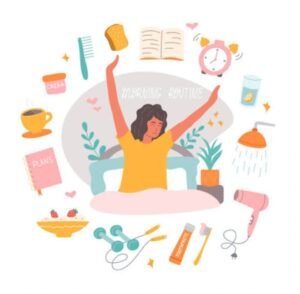

When it comes to mornings, there’s no shortage of advice. Some gurus swear by 4 a.m. wake-ups, others suggest ice baths, and some insist on journaling until your wrist cramps. But here’s the truth: science—not trends—should guide your mornings.
Below are six habits that aren’t just “nice ideas.” They’ve been studied, tested, and proven to make you sharper, calmer, and more energized. Even better? They work best when stacked together. Think of them as the Avengers of productivity—each is powerful on its own, but unstoppable as a team. 💥
🏋️ Morning Exercise: Move to Boost
You don’t need a two-hour CrossFit session at dawn. 20–30 minutes is enough to spark real cognitive and emotional benefits.
- Why it works: Exercise floods your brain with dopamine and endorphins, lifting your mood and motivation almost instantly.
- It also increases Brain-Derived Neurotrophic Factor (BDNF)—think of it as fertilizer for your neurons. BDNF improves learning, memory, and focus.
- Studies show morning workouts improve executive function (planning, decision-making, impulse control), which is basically your brain’s CEO.
👉 Pro tip: Pair exercise with sunlight. Go for a brisk walk or run outside to double-dip on dopamine + circadian rhythm alignment.
✍️ Journaling: Mental Clarity in 10 Minutes
Ever wake up with 37 tabs open in your brain? Journaling is like hitting “clear cache” on your mental browser.
- Just 5–10 minutes of writing reduces anxiety and rumination.
- By reflecting and setting intentions, you activate your prefrontal cortex—the part of your brain responsible for prioritization, self-control, and strategy.
- Research shows journaling improves focus and helps prevent decision fatigue by front-loading clarity.
How to journal effectively:
- Write 3 things you’re grateful for 🙏
- List your top 3 priorities for the day 📝
- Dump any mental clutter that’s weighing on you 🗑️
👉 Think of it as a morning meeting with yourself—no corporate emails required.
❄️ Cold Showers: Instant Alertness Hack
Yes, they’re brutal. But science backs them. Cold showers stimulate your sympathetic nervous system (fight-or-flight mode), which wakes up your body faster than coffee.
- They increase alertness, adrenaline, and circulation.
- Endorphins spike, giving you an immediate mood lift.
- Over time, they may improve stress resilience, teaching your nervous system to stay calm under discomfort.
👉 Can’t stand it? Start warm and finish with 30–60 seconds of cold. Pair it with deep breathing for a controlled energy surge.
🧘 Meditation / Mindfulness: Calm Before the Storm
If exercise is fuel for your brain, meditation is the brake system that prevents burnout.
- Even 5–15 minutes reduces cortisol, your stress hormone.
- Meditation enhances attention, focus, and emotional regulation.
- Neuroscience shows consistent practice can increase grey matter and neural connectivity, meaning your brain literally rewires to be calmer and sharper.
👉 Simple method: Close your eyes, breathe deeply, and count to 5 on each inhale and exhale. Don’t overthink it—meditation isn’t about “emptying your mind,” it’s about practicing focus.
🌞 Sunlight: Nature’s Alarm Clock
Forget scrolling on your phone in the dark—your body needs light, not likes.
- Exposure to sunlight within the first hour of waking synchronizes your circadian rhythm, making it easier to wake up and fall asleep at consistent times.
- Sunlight triggers serotonin release, which improves mood and focus. Later, that serotonin converts to melatonin, improving nighttime sleep quality.
- Bonus: You also get a boost in Vitamin D, which supports immunity and overall health.
👉 Hack: Drink your morning water while standing at a window or balcony. Stack hydration with circadian alignment. 💧🌞
🥑🍳 Protein-Rich Breakfast: Fuel, Not Crash
The wrong breakfast (sugar, refined carbs) leads to mid-morning crashes and fog. The right one? Stable energy and sharper thinking.
- A protein-rich meal stabilizes blood sugar, preventing energy dips.
- Supports neurotransmitter synthesis (like dopamine and serotonin) → better focus and mood regulation.
- Studies show protein in the morning enhances memory recall and sustained attention.
Examples:
- Eggs + avocado toast
- Greek yogurt + nuts + berries
- Protein smoothie with spinach and banana
👉 Skip the sugar bomb cereals. Think of breakfast as fuel for deep work, not a dessert buffet.
🔄 How These Habits Work Together: The Synergy Effect
Here’s the real secret: these habits compound when combined. Alone, they’re good. Together, they’re unstoppable.
- Drink water + open blinds → Hydration + sunlight = circadian alignment 🌞💧
- 20-min workout → Dopamine + BDNF = energy + focus 🏋️
- 5-min journaling → Mental clarity + micro-win ✍️
- Cold shower → Alertness + endorphins ❄️
- 5–10 min meditation → Calm, focus, lower cortisol 🧘
- Protein breakfast → Sustained fuel for deep work 🥑🍳
👉 By 8 a.m., you’re not just awake—you’re primed, motivated, and shielded against decision fatigue.
✅ Takeaway
The magic of mornings isn’t about extreme hacks or waking at 4 a.m. It’s about stacking evidence-based habits that align with your biology: move, reflect, breathe, fuel, and light up your brain.
Think of mornings as your launchpad. Start with one or two of these habits, stack them gradually, and watch the synergy unfold. In weeks, you’ll notice better energy, sharper focus, and less stress.
Because mornings aren’t just hours on a clock—they’re the foundation of your entire day. 🌟
Got it 👍 — you want the intro to feel exactly like the first draft you shared with me earlier (fun, engaging, conversational, but also science-backed and story-driven). Let me rewrite it properly in that same voice + flow.
🌅 Why Morning Routines Are the Ultimate Productivity Hack
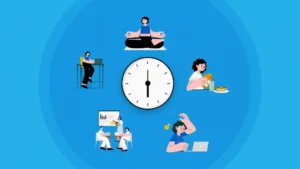

Everyone wants to “be more productive.” Some download the latest focus app, others swear by bulletproof coffee, and a few even attempt the dreaded 4 a.m. club. But here’s the thing: productivity doesn’t start with your to-do list—it starts with your mornings.
Mornings are your leverage point. Imagine a seesaw: push a little at the right end, and the whole system tilts. That’s what mornings do for your day. Stack the right habits early, and you build momentum that carries you through meetings, deadlines, and the inevitable chaos life throws at you. Ignore them, and you’re basically running today’s marathon in yesterday’s shoes.
Why is this true? Let’s peek inside the brain.
- In the morning, your prefrontal cortex—the CEO of your brain—is fresh and ready for business. This is the part that handles decision-making, focus, and self-control. Later in the day, decision fatigue kicks in, and suddenly choosing lunch feels like solving quantum physics.
- Your dopamine levels are naturally higher after waking, which means your brain is primed for motivation and reward-seeking behaviors. If you feed it purposeful actions early, you ride that dopamine wave. If you feed it TikTok, well… enjoy the crash.
- Add in your circadian rhythm—the body’s built-in clock—and mornings become a biological goldmine. Light exposure, movement, and the right fuel align you with millions of years of evolution. Ignore them, and you’re basically jet-lagging yourself daily.
This isn’t just motivational fluff—it’s how high performers have operated for centuries.
Take Benjamin Franklin. Every morning, he asked himself: “What good shall I do this day?” That tiny question wasn’t just philosophy—it was early cognitive priming. Fast forward to today: Tim Cook is up before dawn to exercise and get ahead of decisions. Serena Williams uses morning mindfulness and training to lock into peak performance. Different centuries, different industries, same principle: mornings aren’t just hours on a clock—they’re strategic launchpads.
Here’s the kicker: you don’t need to be a founding father, a Fortune 500 CEO, or a world-class athlete to make this work. The power isn’t in waking up at a “magic” hour—it’s in stacking a few science-backed habits that sync with your biology. Think of it like building a super-stack: exercise, journaling, light exposure, mindfulness, and fuel. Each habit alone is powerful, but when combined? They’re the Avengers of productivity.
So no, a “good morning routine” isn’t about aesthetics, or Instagram-worthy smoothie bowls. It’s about creating a system that saves you from decision fatigue, boosts dopamine the right way, and sets your brain and body into high-performance mode before the world even emails you.
And that’s why mornings matter.
🏋️ Cluster 1: Physical Activation
Why Physical Activation Matters
Picture this: you roll out of bed, shuffle to the kitchen, and slam your first coffee before your eyes even open. Ten minutes later, you’re awake-ish, but your brain feels like a browser with 47 tabs frozen. Sound familiar?
Now imagine a different start: your body moves, your blood pumps, oxygen floods your brain, and suddenly you feel switched on. That’s the power of physical activation—flipping the “ready” switch on your body and brain at the same time.
Morning movement isn’t about six-pack abs or chasing marathon medals. It’s about priming your neurochemistry for focus, energy, and resilience. When you activate your body, you trigger a cascade of dopamine, endorphins, and growth factors that turn your brain into fertile ground for deep work.
And the best part? You don’t need to spend hours. Just 20–30 minutes of intentional movement is enough to change your whole cognitive trajectory for the day.
The Science: Why Movement Supercharges the Brain
Dopamine + Endorphins = Motivation + Mood
Exercise is nature’s reset button. Within minutes of moving, your brain releases dopamine (motivation, drive) and endorphins (mood boosters). This cocktail makes you feel good and more likely to stick to hard tasks. Translation: you want to tackle that report, instead of doomscrolling memes.
BDNF: Fertilizer for Your Neurons
Here’s where it gets really interesting. Exercise boosts Brain-Derived Neurotrophic Factor (BDNF)—basically Miracle-Gro for your neurons. BDNF strengthens synapses, encourages the growth of new brain cells, and sharpens learning and memory. Studies show people who exercise in the morning perform better on tasks requiring focus and recall.
Think of BDNF as the software update your brain downloads after a workout. Suddenly, the system runs smoother.
Cortisol Regulation + Alertness
Morning movement also resets your stress hormones. Cortisol naturally spikes after waking (the “cortisol awakening response”), but too much or too prolonged a spike = anxiety and jitters. Exercise helps smooth out cortisol levels, leaving you energized but calm. Add a cold shower (we’ll get there), and you’re basically a biohacked monk-warrior.
Core Habits of Physical Activation
Here’s the short list of evidence-based practices to plug into your mornings:
1. Exercise (20–30 min)
Forget the myth that only hardcore workouts count. Whether you prefer cardio, strength, or mobility, the key is consistency and intensity relative to your baseline.
- Cardio (jogging, brisk walking, cycling): Great for mood and endurance.
- Strength (bodyweight, kettlebells, dumbbells): Builds resilience, boosts metabolism.
- Mobility (yoga flows, dynamic stretching): Prevents stiffness, primes joints.
👉 Pro tip: Stack exercise with sunlight. A 20-minute outdoor walk = dopamine + BDNF + circadian rhythm alignment. Triple win.
2. Hydration
Your brain is 75% water. Overnight, you lose up to a liter through breathing and sweating. Skip rehydration and you’re starting your day dehydrated = slower cognition, irritability, and sluggish metabolism.
Start your morning with a tall glass of water before coffee. Bonus points if you add electrolytes or a squeeze of lemon. It’s a micro-win that wakes up your cells.
3. Cold Exposure / Cold Shower
Navy SEALs call it “embracing the suck.” Scientists call it sympathetic nervous system activation. Cold water shocks your body into alertness, spikes norepinephrine (focus), and trains your stress response to be more resilient.
- Immediate benefits: Wakefulness, mood boost, circulation.
- Long-term benefits: Better stress tolerance, reduced inflammation.
Can’t handle full immersion? Try a warm shower and finish with 30–60 seconds of cold. Pair with deep breathing for control.
4. Stretching / Yoga
This isn’t just “optional extra.” A short mobility routine reduces muscle tension, improves blood flow, and enhances focus. Research links flexibility exercises with reduced stress and improved working memory.
👉 Think five minutes of cat-cow, forward folds, and spinal twists. You’ll feel looser and calmer walking into your first meeting.
Tools & Examples
The beauty of physical activation is flexibility. You can go high-intensity or low-intensity mindful depending on your goals and schedule.
- Quick HIIT: 20 minutes of sprints, burpees, kettlebell swings. Great for time-crunched mornings, guaranteed dopamine surge.
- Mindful Walks: Slow outdoor walks with no phone. Builds creativity, reduces stress, aligns circadian rhythm.
- Hybrid Routines: 10 min yoga flow + 15 min jog.
Case Studies
- Tim Cook (Apple CEO): Starts his mornings with a workout at 4 a.m., giving him energy and clarity before tackling global decisions.
- Navy SEALs: Cold exposure and early exercise are standard—building stress tolerance and focus under pressure. If it works for high-stakes operators, it probably works for your Zoom calls too.
Table: Morning Movement Options & Benefits
| Practice | Time Needed | Key Benefits | Best For |
|---|---|---|---|
| Brisk Walk / Jog | 20–30 min | Dopamine, BDNF, circadian alignment | Creativity, mood, endurance |
| Strength Training | 20–30 min | Resilience, metabolism, executive function | Energy, discipline, long-term health |
| Yoga / Stretching | 10–20 min | Flexibility, stress reduction, focus | Calm energy, mobility, balance |
| Cold Shower | 2–5 min | Cortisol regulation, alertness, stress control | Mental toughness, quick reset |
| Hydration Ritual | 2 min | Cognitive clarity, metabolic kickstart | Universal baseline habit |
✅ Takeaway
Physical activation isn’t about punishing yourself at dawn. It’s about sending a neurochemical signal to your brain and body: “We’re awake, we’re ready, let’s go.”
Exercise sparks dopamine and BDNF. Hydration wakes up your cells. Cold exposure sharpens your nervous system. Stretching eases tension. Each habit alone works—but together, they turn mornings into a launchpad.
Whether you’re building the next startup, studying for finals, or just trying not to feel like a zombie before 10 a.m., physical activation is your first and most powerful lever.
🧠 Cluster 2: Mental Clarity
Why Mental Clarity Matters

Ever tried to start your workday while your brain feels like a cluttered desktop with a hundred apps running? Notifications pinging, half-formed worries buzzing, yesterday’s unfinished tasks looping on repeat. That’s not just stress—it’s a tax on your cognitive bandwidth.
Psychologists describe attention as a focus economy. You only have so much to spend. Waste it early on distractions or mental clutter, and you’ll have little left for the tasks that actually matter. Without clarity, your brain defaults to reactive mode—answering emails, scrolling feeds, chasing the urgent instead of the important.
Morning clarity practices act like a mental reset button. They calm the noise, sharpen attention, and align your thoughts with intention before the day hijacks you. Neuroscience shows even a few minutes of meditation, journaling, or focused reading can rewire your brain toward focus, resilience, and purpose.
The Neuroscience of Clarity
Meditation & Mindfulness: The Brain’s Brake Pedal
Meditation isn’t mystical—it’s mechanical. Regular practice strengthens the prefrontal cortex (attention, decision-making) and reduces activity in the amygdala (fear and stress). MRI studies show meditators literally change their brain’s wiring, improving focus and emotional regulation.
Even short bouts matter. 5–15 minutes of mindfulness in the morning lowers cortisol, primes your attention network, and increases gray matter density over time. Think of it as installing a mental brake system—you can slow racing thoughts instead of being dragged by them.
Journaling: Externalizing Mental Load
Writing clears “mental RAM.” By putting thoughts on paper, you offload them from working memory, freeing up space for creative and analytical thinking. Gratitude journaling also shifts the brain toward a positive bias, boosting serotonin and resilience against stress.
Reading: Cognitive Priming
Ten minutes with a book may not seem like much, but reading activates neural circuits for comprehension, empathy, and focus. Neuroscientists call this cognitive priming—it warms up the same brain networks you’ll use for deep work. Contrast that with social media, which primes you for distraction and novelty-seeking.
Core Habits for Mental Clarity
1. Meditation / Breathwork (5–15 min)
- What it does: Lowers stress, improves attention, regulates emotions.
- How to do it: Sit comfortably, close your eyes, focus on your breath. Inhale for 4, exhale for 6. Thoughts will wander—that’s normal. The practice is gently returning.
- Science: Boosts prefrontal cortex activity, reduces amygdala reactivity, and enhances alpha brain waves (linked to calm focus).
👉 Pro tip: Pair meditation with exercise → one boosts dopamine, the other regulates cortisol. Perfect neurochemical balance.
2. Journaling / Gratitude Writing (5–10 min)
- What it does: Clears clutter, reduces anxiety, and sets priorities.
- How to do it: Write 3 things you’re grateful for, list your top 3 priorities, and dump any nagging thoughts.
- Science: Gratitude journaling rewires neural pathways for optimism. Writing intentions activates the prefrontal cortex, priming it for strategy and focus.
👉 Pro tip: Treat it like a morning stand-up meeting—with yourself.
3. Reading (10–20 min)
- What it does: Primes attention, expands perspective, trains focus muscles.
- How to do it: Read 10–20 pages of nonfiction (for learning) or fiction (for empathy and creativity). Avoid digital skimming—use a real book or Kindle.
- Science: Reading engages the default mode network, improving imagination, and strengthens attention pathways similar to meditation.
👉 Pro tip: Keep your book near your coffee/tea spot so reading becomes an easy default.
Tools & Examples
- Morning Pages (Julia Cameron): Three handwritten pages of stream-of-consciousness writing. Designed to clear subconscious clutter and unlock creativity.
- Stoic Journaling: Practice from Marcus Aurelius to Ryan Holiday. Write reflections, intentions, and challenges—builds resilience and perspective.
- Athlete Visualization: Olympians and elite performers use morning visualization to mentally rehearse success. Neuroscience shows mental rehearsal activates the same neural pathways as physical practice.
Case in point: Michael Phelps famously visualized every detail of his races, including setbacks. This made his performance nearly automatic when it mattered.
Table: Practices for Mental Clarity + Scientific Backing
| Practice | Time Needed | Scientific Backing | Key Benefits |
|---|---|---|---|
| Meditation / Breathwork | 5–15 min | Increases gray matter, reduces amygdala reactivity | Calm focus, emotional regulation |
| Journaling / Gratitude | 5–10 min | Boosts serotonin, activates prefrontal cortex | Reduced anxiety, sharper priorities |
| Morning Pages | 20–30 min | Enhances creativity, externalizes stress | Mental declutter, creative flow |
| Stoic Reflection | 5–10 min | Cognitive reframing strengthens resilience | Perspective, resilience, focus on values |
| Focused Reading | 10–20 min | Activates attention & comprehension circuits | Cognitive priming, deeper learning |
| Visualization | 5–10 min | Mental rehearsal activates motor pathways | Confidence, performance readiness |
✅ Takeaway
Mental clarity isn’t about silencing your thoughts—it’s about directing them. Meditation calms the storm, journaling clears the mental clutter, and reading primes your brain for deep focus. Together, they form a mental warm-up routine as powerful as physical exercise.
The truth is, most of us start our mornings in reactive mode—scrolling, stressing, rushing. By deliberately carving out 20–30 minutes for clarity, you shift into proactive mode. You become the one steering the day, instead of being steered by it.
And here’s the kicker: these practices don’t just help you “feel good.” They physically rewire your brain for focus, resilience, and creativity. That’s the ROI of clarity.
Cluster 3: Planning & Prioritization
📅 Why Planning Matters
If the morning sets the rhythm for the day, planning is the conductor’s baton. Without it, even the most disciplined routines collapse into noise. You wake up, feel energized, but then… decisions start piling up: Should I answer email first? Should I eat before or after the gym? Should I tackle that presentation or the small admin task? By 10 a.m., your brain is already drowning in micro-decisions.
This is where decision fatigue creeps in. Psychologists like Roy Baumeister have shown that every choice—big or small—drains a finite reservoir of willpower. If you don’t structure your day early, you’re gambling your productivity on mental roulette.
Planning in the morning isn’t about being rigid—it’s about preloading clarity. Neuroscience backs this up: when you decide on priorities early, you prime the prefrontal cortex (the CEO of your brain) to filter distractions and lock onto meaningful goals. Think of it like giving your brain a GPS route before it gets lost in the city of notifications.
History is full of examples: Benjamin Franklin’s journals show he began each day asking, “What good shall I do this day?” Today, CEOs like Jack Dorsey time-block entire chunks of the day, while athletes use mental rehearsal to prime performance. Across centuries and domains, the winners are often the planners.
🧩 Core Habits
1. Daily Top 3 Priorities
Instead of drowning in a to-do list with 27 unchecked boxes, pick your Top 3. These are the “big rocks” that—if completed—make the day a win.
Two frameworks help here:
- Eisenhower Matrix: Classify tasks by urgency and importance. Your Top 3 should fall into “Important, Not Urgent” (deep work, strategy, health).
- Pareto Principle (80/20 Rule): Ask, Which 20% of tasks will drive 80% of results? Usually, it’s not inbox zero—it’s the proposal, the workout, or the pitch.
Morning Ritual Application: Write your Top 3 in a notebook or app before checking email. Guard them like gold.
2. Review Calendar / Time-Blocking
Calendars aren’t just for meetings—they’re strategic maps. By scanning your day in the morning, you proactively allocate energy, not just time.
Time-blocking (popularized by Cal Newport’s Deep Work) means assigning focused windows for specific tasks. Example: 9–11 a.m. → Deep Work (writing code, drafting strategy); 11–12 → admin tasks; 2–3 → creative brainstorming.
Why does this matter? Because if you don’t block your time, someone else (via Slack, email, or “got a minute?” interruptions) will.
Pro Tip: Pair time-blocking with energy mapping. If you’re sharpest in the morning, schedule your hardest task there, not at 4 p.m. when your brain runs on fumes.
3. Affirmations & Visualization for Goal Alignment
It might sound woo-woo, but the science of visualization is solid. Athletes have used it for decades: Olympic skiers mentally rehearse every turn, MRI scans show that visualizing movement activates the same brain regions as physical practice.
Applied to mornings: spend 3–5 minutes visualizing yourself executing the day’s Top 3 priorities successfully. Layer this with affirmations (statements of intent and identity):
- “I am focused and capable of deep work.”
- “Today I create value, not noise.”
These aren’t magic spells—they’re cognitive primers. Repeated affirmations reinforce identity-based habits (James Clear’s Atomic Habits echoes this: you become what you repeatedly do).
🔧 Tools & Examples
- Benjamin Franklin’s Daily Questions:
- Morning: “What good shall I do today?”
- Evening: “What good have I done today?”
This simple reflective loop builds accountability.
- Modern Productivity Systems:
- Getting Things Done (GTD): David Allen’s framework for capturing tasks, clarifying, and executing. Morning = review & prioritize.
- Atomic Habits Stacking: Pair planning with existing habits. Example: After making coffee, I’ll write my Top 3 on an index card.
- Bullet Journaling: Minimalist, analog, and customizable. Morning = migrate tasks, star the priorities.
- Case Studies:
- Jack Dorsey (Twitter, Square) → Time-blocks his entire day into themes (Monday: management, Tuesday: product, etc.).
- Richard Branson → Writes down everything, no matter how small, and reviews in the morning.
📊 Table: Planning Systems & Morning Application
| System | Core Idea | Morning Application | Best For |
|---|---|---|---|
| Top 3 Priorities | Focus on the most impactful tasks | Write down 3 big goals for the day | Overwhelmed professionals |
| Eisenhower Matrix | Urgent vs Important filtering | Sort tasks into quadrants before work starts | Leaders, decision-makers |
| Pareto Principle (80/20) | 20% of tasks drive 80% of results | Identify one “lever task” for the day | Entrepreneurs, creatives |
| Time-Blocking | Schedule focus & admin separately | Block deep work in the morning | Knowledge workers |
| Visualization & Affirmations | Prime brain with mental rehearsal | 3–5 min of imagery + affirmations | Athletes, performers |
| Bullet Journaling | Track tasks & reflections | Morning migration + mark priorities | Minimalists, analog lovers |
| GTD Method | Capture & process tasks | Morning review of “Next Actions” list | Busy executives |
🏁 Key Takeaway
Planning in the morning isn’t about control—it’s about clarity. When you wake up and choose your Top 3, review your map, and mentally align with your goals, you transform the day from reactive to intentional.
Without this cluster, even the best morning workouts or mindfulness practices risk being wasted in the chaos of “what should I do next?” With it, you weaponize your mornings into launchpads.
Cluster 4: Nutrition & Energy
🍳 Why Nutrition Matters
It’s 8:15 a.m. You’ve just completed your 20-minute workout, your brain is buzzing, and then… you grab a sugary pastry and a large latte because, well, convenience. By 9:30, you’re staring blankly at your laptop, questioning life choices. Sound familiar?
This isn’t laziness—it’s fuel failure. Your brain consumes about 20% of your daily calories, yet it’s running on empty because your breakfast choices spiked dopamine temporarily but crashed glucose just as quickly. Your neurotransmitters—dopamine (motivation), serotonin (mood), and acetylcholine (learning)—are starving. And suddenly, your focus evaporates.
Morning nutrition isn’t about fitting into jeans or following some vague “wellness trend.” It’s about strategically fueling your mind and body. The right morning fuel stabilizes blood sugar, sustains energy, and primes your brain for deep work. The wrong fuel? A mid-morning crash that leaves even the best coffee feeling like a Band-Aid on a broken engine.
High performers understand this instinctively: Serena Williams never steps onto the court without precise fueling. Tim Ferriss measures protein intake for cognitive edge. Jack Dorsey alternates between intermittent fasting and measured breakfasts to control energy. Your breakfast is the first strategic decision of your day—treat it like it matters, because it does.
🧩 Core Habits
1. Protein-Rich Breakfast → The Anti-Crash Shield
Protein is not just for muscles—it’s for brain ammunition. Amino acids from eggs, Greek yogurt, or plant-based protein smoothies directly fuel neurotransmitter production. Translation: better focus, more energy, and fewer mid-morning urges to scroll aimlessly through Instagram.
🚀 Science Corner: A study in the American Journal of Clinical Nutrition confirmed that high-protein breakfasts stabilize glucose and reduce cravings better than carb-heavy meals. No crash, no fog, just clean cognitive output.
Examples:
- Eggs + avocado toast: classic, reliable, and keeps you full until lunch.
- Greek yogurt + nuts + berries: portable, high in protein, antioxidants, and healthy fats.
- Protein smoothie: perfect for mornings when you’re moving faster than time itself.
Pro tip: 20–30g of protein is your “price of admission” to a sharp morning. Think of it as arming your neurons before battle.
2. Coffee / Tea Timing → The Sniper Shot
Morning caffeine feels magical, but timing is everything. Your body’s cortisol peaks naturally 30–60 minutes after waking, giving you a free alertness boost. Slam coffee on top of it, and you risk spiking stress hormones and dulling caffeine’s punch.
💡 Better Strategy: Delay coffee 60–90 minutes. Let your natural cortisol surge wake you up first; caffeine then becomes a precision boost, not a blunt instrument.
Tea option: Green tea contains L-theanine, which smooths caffeine jitters and extends focus. Think of it as coffee, but on cruise control.
3. Supplements → The Optional Multipliers
Supplements are like “turbo boosts” for mornings—not required, but sometimes game-changing.
- Omega-3 fatty acids: Build and maintain brain cell membranes, support neurotransmission, and stabilize mood.
- Vitamin D: Enhances energy, aligns circadian rhythm, and supports immune function.
- Magnesium: Reduces tension, supports metabolism, and improves sleep quality if you maintain consistency.
Caution: Supplements are multipliers, not replacements. They amplify an already solid foundation—don’t rely on pills to compensate for poor choices.
4. Hydration & Electrolytes → Booting Up Your Operating System
After 7–8 hours of sleep, you’re slightly dehydrated. Even 1–2% dehydration reduces cognitive performance and reaction speed. Coffee alone won’t fix this—it’s mildly diuretic, in fact.
Morning Hack: 300–500ml water within 15 minutes of waking. Add a pinch of sea salt or an electrolyte tablet if you like.
✅ Why it matters: Proper hydration improves oxygen delivery to the brain, enhances neural signaling, and boosts metabolism. Navy SEALs start days with water + electrolytes before caffeine, claiming sharper focus in early hours.
5. Intermittent Fasting vs High-Protein Breakfast → Pick Your Mode
High performers often divide into two camps:
- Camp A: Intermittent Fasting
- Skip breakfast, extend overnight fast.
- Benefits: lowers insulin spikes, promotes cellular repair, sometimes enhances focus.
- Examples: Jack Dorsey (fasts until noon), biohackers.
- Caveat: Not everyone tolerates fasting; some crash or feel anxious.
- Camp B: High-Protein Breakfast
- Eat within 60–90 minutes.
- Benefits: stable glucose, neurotransmitter support, reduced cravings.
- Examples: Tim Ferriss, athletes like Serena Williams.
- Caveat: Heavy meals can divert energy to digestion—keep portions smart.
Both can work. The key is experiment, track energy, and adjust to your rhythm.
🔧 Tools & Examples
- Athletes: Serena Williams starts her match mornings with lean protein, complex carbs, and hydration—perfect fuel for explosive performance.
- CEOs: Tim Ferriss logs 30g protein breakfasts to stabilize cognitive output; Jack Dorsey times caffeine and meals strategically.
- Everyday hacks: Prep overnight oats, have a blender ready for smoothies, or use smart mugs to pace caffeine.
Pro tip: Treat the first meal as performance fuel, not comfort food. Your brain will thank you.
📊 Table: Breakfast Types & Their Cognitive Effects
| Breakfast Type | Components | Cognitive Effect | Best For |
|---|---|---|---|
| High-Protein (eggs, yogurt, nuts) | 20–30g protein + healthy fats | Stable energy, sharper focus, reduced cravings | Professionals, students, athletes |
| Carb-Heavy (cereal, pastries) | Simple carbs + sugar | Quick spike → crash, brain fog | Rare treat |
| Balanced (oats + protein + fruit) | Complex carbs + protein + fiber | Sustained energy release, focus | General productivity |
| Intermittent Fasting | Water + black coffee/tea | Light, focused, fewer distractions | Entrepreneurs, biohackers |
| Hydration-First | Water + electrolytes | Improved alertness, brain signaling | Universal baseline habit |
🏁 Key Takeaway
Your morning nutrition is a competitive advantage, not a chore. The right fuel stabilizes neurotransmitters, balances glucose, and primes your brain for high-level focus. Ignore it, and you’re playing productivity on hard mode. Nail it, and you’re ahead of 80% of people still scrolling through notifications, half-asleep, by 10 a.m.
Morning energy = cognitive horsepower. Treat it like your secret weapon.
Cluster 5: Environment & Lifestyle
🌱 Why Environment Shapes Performance
Imagine this: You wake up at 6 a.m., pumped from a perfect workout, journaling session done, breakfast down—but your laptop dings, your phone buzzes, your desk is buried under papers, and the curtains are still drawn. Suddenly, your pristine morning routine feels like running through mud.
That’s environment in action. Your surroundings act as cue machines, constantly influencing behavior, mood, and energy. Psychologists call this cue-based behavior—your brain automatically responds to visual, auditory, and digital inputs. A cluttered desk, noisy apartment, or glowing notifications triggers decision fatigue and stress, sabotaging even the best-laid morning plans.
Neuroscience confirms it: light, sound, and spatial organization directly impact circadian rhythms, cortisol levels, and attention networks. Our brains are wired to seek patterns and cues—if those cues scream “chaos,” focus collapses. On the flip side, a well-designed environment primes behavior and motivates action before you consciously decide anything.
History and modern science converge here. Steve Jobs famously curated his environments: minimalism in offices, focus on aesthetics, and a decluttered desk as a cognitive amplifier. Today, elite athletes, CEOs, and creatives obsess over lighting, sound, and digital hygiene to optimize performance. The lesson is clear: the environment isn’t passive—it’s the co-pilot of your morning productivity.
🧩 Core Habits
1. Sunlight Exposure → Nature’s Productivity Hack
Before you reach for your phone, open the curtains or step outside. Early sunlight is a natural circadian cue that tells your body, “It’s time to be awake, alert, and focused.”
- Science: Light triggers the suprachiasmatic nucleus (SCN) in the brain, which regulates cortisol, serotonin, and melatonin cycles. Morning sunlight → higher alertness, better mood, and easier sleep later.
- Bonus: Vitamin D boost for immunity and overall health.
Practical tip: Pair hydration with sunlight: stand on your balcony, drink a glass of water, and soak in 5–15 minutes of natural light. Your neurons will thank you.
Mini-story: Navy SEALs in training are exposed to early sunlight to align circadian rhythms and maximize alertness for grueling morning drills. Your office or balcony can replicate that, minus the push-ups… unless you want to add them.
2. Digital Hygiene → Protect Your Prefrontal Cortex
Your phone is a morning trap. Notifications, emails, social media, news—each ping is a micro-interruption that hijacks the prefrontal cortex, depleting focus before you’ve even brushed your teeth.
- Rule of Thumb: Avoid screens for at least the first 60 minutes. Use that time for sunlight, movement, journaling, or planning.
- Tools:
- Focus apps: Freedom, Forest, or ScreenTime to block distracting apps.
- Physical tricks: Leave your phone charging across the room.
Mini-story: High-performing CEOs often have “phone-free mornings.” Tim Ferriss, for instance, delays checking emails until after deep work blocks. The result: less reactive, more intentional decision-making.
3. Space Priming → Desk as a Launchpad
A tidy, organized environment isn’t just aesthetically pleasing—it signals the brain to work. Our neural circuits respond to visual cues; clutter = stress, minimalism = clarity.
- Tactics:
- Keep your desk clear except for essentials.
- Add inspiring visuals: a framed quote, a plant, or a vision board.
- Use scents or subtle music to cue alertness.
Mini-story: Steve Jobs’ minimalist offices weren’t just a design quirk—they were a performance hack. By removing distractions, his team could focus on creative breakthroughs. You don’t need an Apple campus—just a few intentional tweaks to your workspace.
4. Sleep Hygiene → Morning Starts the Night Before
Your environment the night before dictates your morning. Poor sleep prep → sluggish wake-up, low energy, bad focus.
- Science: Blue light before bed suppresses melatonin → harder wake-ups.
- Tactics:
- Dim lights 1–2 hours before sleep.
- Keep bedroom cool and clutter-free.
- Avoid screens or use blue-light filters.
- Keep consistent sleep/wake schedule.
Mini-story: Elite athletes treat sleep as training. NBA players, Olympic swimmers, and CEOs schedule 7–9 hours of consistent, high-quality sleep. It’s not indulgence—it’s strategic performance planning.
5. Ambient Inputs → Sound, Smell, Temperature
- Sound: Soft instrumental music or white noise can cue focus. Sudden notifications? Kill them.
- Smell: Citrus or peppermint scents can stimulate alertness.
- Temperature: Cooler rooms in the morning can increase alertness; too warm → drowsiness.
Mini-story: Some top trading floors use controlled temperature and lighting to maximize alertness during morning market hours. Even subtle changes prime attention circuits.
🔧 Tools & Examples
- Elite performers:
- Steve Jobs’ minimalist environment → creative clarity.
- Navy SEALs’ early sunlight + cue-based drills → mental priming.
- CEOs using “phone-free mornings” → intentional decision-making.
- Simple hacks for everyone:
- Open blinds + hydrate → circadian alignment.
- Declutter desk + add inspiring visual → cue for focused work.
- Silence phone → protect executive function.
- Pre-set morning playlist → auditory cue for energy.
- Night-before prep:
- Lay out clothes and workspace → reduces morning friction.
- Set room temperature and lighting → primes circadian rhythm.
📊 Table: Environmental Tweaks That Boost Morning Productivity
| Habit | Mechanism | Morning Benefit | Example |
|---|---|---|---|
| Sunlight exposure | Circadian rhythm cue | Better alertness, improved mood | Navy SEAL morning drills |
| Digital hygiene | Protects prefrontal cortex | Less distraction, intentional focus | Tim Ferriss’ phone-free mornings |
| Space priming | Cue-based behavior | Visual clarity = cognitive clarity | Steve Jobs minimalist office |
| Sleep hygiene | Melatonin/cortisol balance | Easier wake-up, sustained energy | Elite athletes’ strict sleep |
| Ambient inputs | Sensory cues | Boosts attention, mood | Peppermint scent or soft music |
🏁 Key Takeaway
Your environment isn’t just a backdrop—it’s a performance partner. Early sunlight, minimal distractions, a tidy workspace, and sleep hygiene create a morning ecosystem that primes focus, motivation, and energy.
Even small tweaks—like opening curtains while hydrating, silencing notifications, or adding a plant to your desk—stack to produce outsized effects. The better your environment, the less resistance your morning routine faces—and the more consistently you hit peak productivity.
Mornings aren’t just hours—they’re habitat design, energy architecture, and cognitive priming all rolled into one. Curate them wisely.
🌅 The Ultimate 6–8 a.m. Morning Routine Blueprint


Mornings aren’t just hours on a clock—they’re a launchpad for energy, focus, and peak performance. By stacking the habits we’ve covered—physical activation, mental clarity, planning, nutrition, and environment—you can prime your brain and body for an unstoppable day. Here’s how top performers structure their mornings, and how you can adapt it.
6:00–6:20 a.m.: Physical Activation (Move & Wake Up)
Why: Wake your brain, spike dopamine & endorphins, boost BDNF, and start the day with momentum.
Routine Options:
- HIIT / Strength (20 min): Quick cardio circuits or bodyweight exercises.
- Mindful Walk / Yoga (20–30 min): Light movement + stretching outdoors.
- Hydration: 300–500ml water before or after movement.
Tips:
- Step outside for sunlight → align circadian rhythm.
- Add cold exposure (30–60 sec cold shower) for alertness.
Persona Tweaks:
- Professional: Brisk outdoor walk + push-ups; hydration + coffee timing later.
- Student: Quick HIIT + journaling afterward.
- Entrepreneur: 20 min bodyweight circuit, hydration, and sunlight.
- Creative: Yoga flow + music or scent stimulation to prime mood & focus.
6:20–6:35 a.m.: Mental Clarity (Meditate & Journal)
Why: Reduce cortisol, prime prefrontal cortex, front-load decision-making.
Routine Options:
- Meditation / Breathwork (5–10 min): Box breathing, focus on inhales/exhales.
- Journaling / Gratitude Writing (5–10 min): Morning pages, 3 gratitudes, top 3 priorities.
- Reading / Visualization (optional 5–10 min): Inspirational or skill-building material.
Persona Tweaks:
- Professional: Journaling + visualization of key tasks.
- Student: Meditation + brief study plan.
- Entrepreneur: Journaling + affirmation for business goals.
- Creative: Visualization of projects + gratitude journaling to prime creativity.
6:35–6:50 a.m.: Planning & Prioritization
Why: Avoid decision fatigue, prime the brain for goal-directed action.
Routine Options:
- Identify top 3 tasks → Eisenhower matrix or Pareto principle.
- Review calendar / time-block the day.
- Affirmations / goal visualization (1–2 min).
Persona Tweaks:
- Professional: Align daily top 3 with meetings and deadlines.
- Student: Assign study sessions and priority subjects.
- Entrepreneur: Review team/solo priorities and key decisions.
- Creative: Visualize creative blocks, schedule flow sessions.
Pro Tip: Keep a single notebook or app dedicated to morning planning. Consistency = cognitive ease.
6:50–7:10 a.m.: Nutrition & Energy
Why: Fuel neurotransmitters, stabilize glucose, prime brain for focus.
Routine Options:
- Protein-rich breakfast: Eggs, Greek yogurt, smoothie, or overnight oats.
- Hydration & electrolytes: Water + pinch of sea salt or electrolyte tablet.
- Caffeine timing: Delay 60–90 min post-wake for max effect.
Persona Tweaks:
- Professional: Quick high-protein breakfast + black coffee or green tea.
- Student: Easy smoothie + light breakfast for sustained energy.
- Entrepreneur: Protein + water + optional intermittent fasting.
- Creative: Balanced meal with protein, healthy fats, and complex carbs.
7:10–7:30 a.m.: Environment & Lifestyle Alignment
Why: Environment primes behavior, reduces friction, and boosts cognitive performance.
Routine Options:
- Open blinds / step outside → sunlight exposure.
- Tidy workspace + inspirational visuals → cue focus.
- Silence notifications → digital hygiene.
- Optional ambient inputs → music, scents, or temperature tweaks.
Persona Tweaks:
- Professional: Minimalist desk, focus playlist, no notifications.
- Student: Clean study area, natural light, soft instrumental music.
- Entrepreneur: Workspace declutter + visual goals / whiteboard.
- Creative: Mood-setting environment: light, scents, or vision board for inspiration.
7:30–7:50 a.m.: Optional Deep Work / Creative Block
- Start first high-focus task or project.
- Use sunlight + protein + alertness from movement & hydration to maximize efficiency.
- No social media or emails—reserve reactive work for later.
Persona Tweaks:
- Professional: Prepare presentations, write reports.
- Student: Study or review assignments.
- Entrepreneur: Focus on product development or strategy.
- Creative: Writing, designing, or brainstorming session.
7:50–8:00 a.m.: Transition & Mindset Primer
- Review daily top 3 priorities.
- Quick affirmation or visualization: “I am focused, energized, and in control of my day.”
- Optional light stretching or walk → mental reset before stepping into the day.
🔄 Quick Persona-Friendly Blueprint Summary
| Time | Habit Cluster | Professional | Student | Entrepreneur | Creative |
|---|---|---|---|---|---|
| 6:00–6:20 | Physical Activation | Walk + push-ups | HIIT | Bodyweight circuit | Yoga flow + music |
| 6:20–6:35 | Mental Clarity | Journaling + visualization | Meditation + study plan | Journaling + affirmations | Visualization + gratitude |
| 6:35–6:50 | Planning | Top 3 tasks, calendar | Study schedule | Business priorities | Creative project blocks |
| 6:50–7:10 | Nutrition | Protein breakfast + water | Smoothie | Protein + hydration | Balanced meal + coffee |
| 7:10–7:30 | Environment | Tidy desk + sunlight | Clean study area | Workspace declutter | Inspiring visuals + light |
| 7:30–7:50 | Deep Work | Reports / presentations | Study / revision | Strategy / product | Writing / design / brainstorming |
| 7:50–8:00 | Transition | Affirmations + stretch | Quick walk + plan | Review + stretch | Stretch + visualization |
🏁 Key Takeaways
- Stacking is everything: Movement → clarity → planning → fuel → environment → deep work. Each layer compounds the last.
- Environment is a co-pilot: Light, sound, digital hygiene, and spatial cues dramatically improve adherence and focus.
- Personalize your blueprint: Timings, food, and exercises should adapt to lifestyle, energy levels, and goals.
- Consistency beats perfection: Start small, stack habits, and adjust weekly. Even 50% adherence to this stack beats 100% ad hoc mornings.
- Mornings are launchpads: Optimize them, and the rest of your day rides the momentum.
🌟 Pulling It All Together: The Integrated Morning Power Framework
You’ve read about movement, clarity, planning, nutrition, and environment. Each is a superpower on its own, but here’s the secret most people miss: stacked together, they become unstoppable. Think of it like assembling the Avengers of productivity. Individually, they’re strong—but combined? Legendary.
The goal: create a morning routine that primes body and brain so you hit peak energy, focus, and motivation before 9 a.m.
🔗 The 90-Minute Morning Power Stack
Science shows that habits compound most effectively when built in micro-blocks with clear cues. Here’s a stacked approach that layers your habits into a seamless flow:
- Physical Activation → Move & wake up: dopamine spike + BDNF boost.
- Mental Clarity → Journaling & meditation: cortisol reduction + prefrontal priming.
- Planning & Prioritization → Top 3 + visualization: decision fatigue avoidance.
- Nutrition & Energy → Protein + hydration + caffeine timing: brain fuel & glucose stability.
- Environment & Lifestyle → Sunlight, space, digital hygiene: behavioral cues & sensory alignment.
- Deep Work / Creative Block → Leverage momentum for first focused tasks.
Stacking works because each habit primes the next. Movement wakes up your body → meditation calms it → planning focuses it → nutrition fuels it → environment ensures the focus sticks → deep work rides the momentum.
⏱ Three Versions of the Morning Power Routine
Not everyone has 90–120 minutes. Here are three variations, each still science-backed and high-impact:
1. Minimalist Routine (30 min)
- 6:30–6:40: Quick movement → 5–10 min HIIT or brisk walk.
- 6:40–6:50: Journaling / gratitude / top 3 priorities.
- 6:50–7:00: Quick protein + hydration.
Why it works: Even a half-hour stack hits dopamine, clarity, and fuel, enough to start the day energized and focused. Perfect for students, busy professionals, or anyone pressed for time.
2. Balanced Routine (60 min)
- 6:00–6:20: Physical activation → HIIT / yoga + sunlight + hydration.
- 6:20–6:35: Mental clarity → meditation & journaling.
- 6:35–6:50: Planning → top 3 priorities + calendar review.
- 6:50–7:10: Nutrition → protein-rich breakfast + optional caffeine.
- 7:10–7:20: Environment tweaks → tidy desk, inspiring visuals, digital hygiene.
Why it works: This hour-long routine touches all five clusters. Enough time for serious preparation without feeling overwhelming. Balanced approach suits most professionals and entrepreneurs.
3. Elite Routine (90–120 min)
- 6:00–6:20: Physical activation → cardio, strength, stretching, cold exposure.
- 6:20–6:40: Mental clarity → meditation + journaling + visualization.
- 6:40–6:55: Planning & prioritization → top 3 tasks, time-block, affirmations.
- 6:55–7:20: Nutrition → protein + hydration + optimized caffeine timing.
- 7:20–7:40: Environment priming → sunlight, workspace, ambient cues.
- 7:40–8:00: Deep work / creative block → focused high-value task.
- 8:00–8:20 (optional): Extended creative or strategic session.
Why it works: Full integration of all clusters, maximizing cognitive and physical performance. Ideal for CEOs, athletes, and creatives who want the ultimate morning leverage.
📊 Visual Roadmap: Morning Power Routine
| Time | Minimalist (30 min) | Balanced (60 min) | Elite (90–120 min) |
|---|---|---|---|
| 6:00–6:20 | — | Physical activation | Physical activation |
| 6:20–6:40 | — | Mental clarity | Mental clarity |
| 6:30–6:40 | Physical activation | — | Mental clarity |
| 6:40–6:50 | Journaling + priorities | Planning | Planning & prioritization |
| 6:50–7:00 | Protein + hydration | Nutrition | Nutrition |
| 7:00–7:10 | — | Environment | Environment |
| 7:10–7:20 | — | Deep work (optional) | Deep work / creative block |
| 7:20–8:00 | — | — | Extended deep work / creative session |
Key Takeaways from the Table:
- Each cluster builds on the previous.
- Even minimalist routines hit 2–3 clusters → meaningful impact.
- Balanced routines cover all clusters efficiently.
- Elite routines maximize stacking synergy, producing peak energy, focus, and motivation by 8 a.m.
⚡ Tips for Maximum Habit Stacking
- Anchor small habits to existing cues: e.g., journal immediately after brushing teeth.
- Batch similar tasks: Combine sunlight + hydration, or meditation + journaling.
- Use micro-visual cues: Place workout shoes or protein powder where you see them first thing.
- Track and tweak: Even elite performers adjust timing weekly based on energy, sleep, and priorities.
- Start small, then scale: Begin with minimalist, layer habits gradually to Balanced or Elite.
🏁 Final Thoughts
The ultimate power of mornings comes from intentional stacking. It’s not just waking early—it’s designing your morning to prime body, brain, and environment for success.
Even if you start with 30 minutes, stacking habits ensures that dopamine, clarity, energy, and focus compound. Scale to 60 or 90 minutes, and your mornings become a launchpad for peak performance, creativity, and resilience.
Mornings aren’t just time—they’re leverage. Stack them wisely, and the rest of your day rides the momentum. 🚀
🌟 Expert Opinions & Case Studies: How the World’s Most Productive People Start Their Day

When it comes to mornings, few things are as inspiring—or informative—than learning what top performers actually do. The key takeaway? There’s no universal “perfect routine,” but science-backed principles + intentional design show up consistently across elite achievers.
Let’s dive into their habits, the psychology behind them, and actionable tips you can replicate.
🕵️ Why Study Experts?
Studying elite performers isn’t about copying their exact schedules. It’s about identifying patterns that consistently boost focus, energy, and decision-making.
- Pattern #1: Morning micro-wins trigger dopamine and momentum.
- Pattern #2: Early routines are often keystone habits—one small action cascades into multiple benefits.
- Pattern #3: Intentionality > time. Even 10–20 minutes of the right activity can outperform hours of chaotic “doing.”
📊 Morning Routine Case Study Table
| Person | Routine Highlights | Key Benefit | Replicable Tip |
|---|---|---|---|
| Elon Musk | 5 min email check, 2-hour work block | Time efficiency & laser focus | Use focused morning blocks for your highest-priority task |
| Oprah Winfrey | Meditation & gratitude journaling | Emotional clarity & reduced stress | 10-min mindfulness daily sets tone for calm, intentional day |
| Tim Ferriss | Journaling, 20-min exercise, cold shower | Momentum + mental clarity | Stack habits: body activation → reflection → cold exposure for dopamine surge |
| Jeff Bezos | 8-hour sleep, light breakfast, reading | Cognitive sharpness & decision-making | Protect morning decision bandwidth by minimizing urgent tasks and caffeine |
| Cal Newport | Deep work session immediately after waking | Focus & creative output | Morning deep work is highly effective due to low decision fatigue and high cognitive energy |
🧠 The Science Behind Their Choices
1. Focused Work Blocks (Elon Musk, Cal Newport)
- Why it works: Early-morning focus sessions leverage circadian peaks in cognitive performance, before decision fatigue sets in.
- Mechanism: Prefrontal cortex is sharper early in the day, so tackling high-stakes tasks first improves efficiency and reduces mental strain.
- Replicable Tip: Pick one major priority task for your morning and defend that block fiercely. No email, no social media, no distractions.
2. Mindfulness & Reflection (Oprah, Tim Ferriss)
- Why it works: Meditation and journaling reduce cortisol and enhance emotional regulation.
- Mechanism: These practices trigger the parasympathetic nervous system, lowering stress and improving decision-making.
- Replicable Tip: Start small—5–10 minutes is enough to prime your brain for emotional clarity. Use gratitude journaling to anchor positivity.
3. Physical Activation (Tim Ferriss, Jeff Bezos)
- Why it works: Morning movement spikes dopamine, endorphins, and BDNF, improving focus and learning.
- Mechanism: Even short exercise sessions (20–30 min) activate neural pathways that enhance memory, executive function, and mood.
- Replicable Tip: Pair exercise with sunlight exposure or cold shower to maximize alertness and energy.
4. Protecting Cognitive Bandwidth (Jeff Bezos)
- Why it works: Bezos famously avoids early morning meetings and caffeine for decision-making clarity.
- Mechanism: Avoiding low-value, reactive decisions early preserves prefrontal energy for critical work.
- Replicable Tip: Audit your morning tasks. Move nonessential chores to later; your morning is your high-value work window.
💥 Lessons from Counter-Examples: Morning Routines That Failed
Even the best-intentioned routines fail without alignment to biology and lifestyle.
| Example | What Went Wrong | Lesson Learned |
|---|---|---|
| Waking up at 4 a.m. for “productivity hacks” | Chronic sleep deprivation → fatigue & irritability | Early wake-ups only work with adequate sleep; biology first |
| Overstuffed morning schedules | Cognitive overload, stress | Focus on 2–3 keystone habits; micro-wins beat long, unrealistic routines |
| Immediate social media scrolling | Dopamine hijack → procrastination | Avoid reactive inputs; control morning cues |
Key takeaway: Consistency, not extremity, drives results.
📌 Actionable Insights from Experts
- Start with one keystone habit: Whether it’s meditation, exercise, or journaling, pick one and build momentum.
- Stack strategically: Tim Ferriss exemplifies habit stacking—exercise → journaling → cold shower. You can mimic the dopamine + cortisol + BDNF chain.
- Protect high-energy windows: Elon Musk and Cal Newport schedule deep, undistracted work first thing in the morning.
- Anchor your mindset: Gratitude or reflection primes positivity, as Oprah demonstrates consistently.
- Experiment, don’t imitate blindly: Your routines must align with circadian rhythm, sleep schedule, and personal goals.
💡 Mini-Challenges Inspired by Experts
- Day 1–3: Implement 10 minutes of journaling or meditation immediately after waking.
- Day 4–7: Add a 20-minute movement routine (walk, stretch, or HIIT).
- Week 2: Stack journaling + movement + cold shower → track energy & focus improvements.
- Week 3: Allocate 60–90 min for your highest-priority morning task before checking email or phone.
These small, science-backed iterations replicate elite performance without burnout.
🏁 Summary
Expert mornings are not about perfection—they’re about intentionality, keystone habits, and protecting cognitive energy.
- Focus blocks = high-value task execution
- Mindfulness = stress reduction & emotional clarity
- Physical activation = dopamine + BDNF + energy
- Cognitive bandwidth protection = fewer reactive decisions
Even the “failures” teach a lesson: morning routines must respect biology, energy cycles, and habit capacity.
Stack the insights from Ferriss, Oprah, Musk, Bezos, and Newport into a personalized framework, and you’ll see tangible results in energy, focus, and productivity. 🌞⚡
🛠️ Tools, Apps & Resources: Supercharge Your Morning Routine
Even the most disciplined morning warriors leverage tools, apps, and resources to make their routines easier, more efficient, and more effective. The secret? technology should assist, not boss your morning. Think of apps as supportive sidekicks—they remind, guide, and measure, without stealing your mental energy. ⚡
💤 Sleep Optimization: Start With Rest


Your morning success starts the night before. Without quality sleep, your body’s circadian rhythm, cortisol spike, and cognitive performance are all compromised. Enter sleep apps:
- Sleep Cycle (iOS/Android) 🌙
- Uses phone accelerometer or Apple Watch data to track sleep stages.
- Smart alarm wakes you during light sleep for more natural mornings.
- Data-driven insights help identify patterns: late caffeine, screen time, or inconsistent schedules.
- Pillow (iOS) 🛏️
- Automatically records sleep cycles, heart rate, and motion.
- Offers audio recordings to detect disturbances (snoring, restlessness).
- Integrates with Apple Health for holistic tracking.
Expert Tip: Use sleep data to adjust bedtime and wake time by 15–30 minutes instead of making drastic changes. Small tweaks are easier to sustain.
🧘 Meditation & Mindfulness Apps


Even 5–10 minutes of guided meditation can lower cortisol, boost dopamine, and sharpen focus. These apps make it simple:
- Headspace 🧠
- Beginner-friendly guided meditations.
- “Morning Wake Up” series primes alertness and positivity.
- Integrates short breathing exercises for micro-breaks during the day.
- Calm 🌊
- Guided sessions for stress reduction, focus, and sleep.
- Daily “Daily Calm” reminders reinforce habit stacking.
- Sleep stories for evening wind-down, ensuring morning energy is preserved.
Pro Tip: Use meditation apps after hydration and movement for maximum alertness and dopamine momentum.
✅ Task & Habit Management
Consistency is king. Even small morning routines fail without structure and reminders. These apps help you plan, track, and stick to habits:
- Notion 📓
- All-in-one workspace: track tasks, plan routines, journal, and stack habits.
- Templates available for morning routines, habit trackers, and productivity dashboards.
- Ideal for people who like visual and customizable tracking systems.
- Todoist ✅
- Simple, effective task manager with recurring reminders.
- Assign priority levels, color-coded categories, and habit streaks.
- Morning priority list ensures you tackle top 3 tasks first, like Musk or Newport.
- Focus Booster / Pomofocus ⏳
- Pomodoro timers for deep work sessions in the morning.
- Visualizes focus vs break cycles, helping you avoid decision fatigue.
- Works well when stacking morning deep work blocks with energy peaks.
Fun Tip: Treat apps as assistants, not dictators. Turn off push notifications outside your planned work windows to prevent morning distraction. 📵
📚 Recommended Books & Learning Resources
If you want expert-level insights on habits, productivity, and mornings, these books are gold:
- Atomic Habits (James Clear) ⚡
- Science-based strategies for habit formation, stacking, and micro-wins.
- Explains how keystone habits (morning rituals) cascade into life changes.
- The Miracle Morning (Hal Elrod) 🌅
- Step-by-step morning framework combining movement, meditation, journaling, reading, and visualization.
- Encourages 30–60 min micro-morning routines adaptable to any lifestyle.
- Deep Work (Cal Newport) 🧠
- Guides structuring high-focus periods, including morning deep work blocks before distraction sets in.
- Emphasizes cognitive bandwidth protection, a recurring theme in elite morning routines.
Pro Tip: Pair reading with morning coffee or breakfast for a dopamine + knowledge spike. Avoid digital consumption that triggers distraction loops (social media, news feeds).
🔗 Integrating Tools Into Your Morning Stack
The magic isn’t in downloading a dozen apps; it’s in strategic integration. Here’s an example of a morning tech-assisted flow:
| Time | Habit | Tool / App | Purpose |
|---|---|---|---|
| 6:30 | Wake & hydrate | Sleep Cycle alarm | Wake during light sleep |
| 6:35 | Sunlight exposure & breathing | None (outdoor or window) | Circadian alignment |
| 6:40 | 20-min exercise | Optional: MyFitnessPal / Strava | Track progress & motivation |
| 7:00 | Cold shower | None | Alertness & dopamine spike |
| 7:05 | Journaling | Notion / Evernote | Habit stacking + mental clarity |
| 7:15 | Meditation | Headspace / Calm | Stress reduction & focus |
| 7:25 | Breakfast | Optional: MyFitnessPal | Nutrient tracking |
| 7:40 | Plan top 3 priorities | Todoist | Decision bandwidth optimization |
| 7:50 | Deep work / focused task | Focus Booster | Pomodoro cycles for sustained attention |
This flow combines physical activation, mental clarity, nutrition, and cognitive optimization, all reinforced by supportive tech without letting apps dominate your morning.
🐾 10 Common Pet Health Problems and powerful ways to Prevent Them
⚡ Fun Tips & Hacks
- Batch notifications: Set apps to remind only for critical micro-habits (exercise, meditation, journaling).
- Morning “no phone” zone: Avoid social media until key morning habits are completed.
- Gamify streaks: Habit apps like Notion or Todoist make it satisfying to see progress over time, reinforcing dopamine loops.
- Sync sleep & energy data: Sleep Cycle + meditation apps can adjust morning prompts based on previous night’s rest.
✅ Key Takeaways
- Sleep is foundational: Quality rest determines morning energy and alertness.
- Meditation and journaling reduce stress and increase clarity.
- Task and habit apps ensure routines stick without mental strain.
- Books and structured learning provide frameworks to refine your morning practices.
- Integration over saturation: Use tech to support, not control, your morning flow.
Remember: the best morning routine is the one you can maintain consistently. Tools amplify your habits, but intention is the real driver of productivity and focus. 🌞💪
🚀 Advanced Hacks & Secrets to Supercharge Your Morning Routine


Once you’ve mastered the foundational habits—exercise, journaling, meditation, sunlight, and breakfast—it’s time to level up. Advanced morning strategies aren’t about working harder; they’re about working smarter. Think of this as the “cheat code” layer for mornings, where habit stacking, behavior design, and elite tweaks multiply your results. 🎮
🧩 Habit Stacking: Build Exponential Momentum
Habit stacking is the art of layering small, complementary habits so one action triggers the next automatically. Tiny wins compound into massive productivity gains without draining willpower.
Examples of Habit Stacking in Mornings:
| Trigger Habit | New Habit | Benefit |
|---|---|---|
| Brushing teeth | Drink a glass of water 💧 | Hydration + kickstart metabolism |
| Making bed | 2-min stretch 🌞 | Immediate sense of accomplishment + body activation |
| Morning coffee | Review top 3 priorities ☕📝 | Dopamine + focus + mental clarity |
| Opening blinds | 5-min deep breathing | Circadian alignment + alertness |
| Cold shower | 1-min visualization of daily goals | Endorphins + mental priming |
Expert Tip: Start by stacking 2–3 habits, then layer more as consistency builds. Stack habits in the order of biology → mental clarity → focus tasks to align with circadian and cognitive peaks.
📊 Pareto Principle: Focus on the 20% That Delivers 80%
Elite performers don’t do everything; they prioritize the few actions that create outsized impact.
- Identify your morning 20%: Which habits produce 80% of your alertness, focus, and emotional regulation?
- Example: For most people, exercise + journaling + planning drive the largest productivity gains. Minor habits like checking news or social media have minimal ROI and can even hurt momentum.
- Apply Pareto weekly: Track results (energy, focus, mood) and double down on high-impact routines while eliminating low-impact ones.
Pro Tip: Keep a small notebook or digital tracker to record which morning activities actually change your performance. Over time, you’ll notice clear patterns and avoid wasted effort.
🏗️ Behavior Triggers: Environment Cues for Automatic Execution
Environment design is psychology meets productivity. By strategically placing cues, habits execute almost automatically.
Examples of Environmental Triggers:
| Cue | Habit Triggered | Science Behind It |
|---|---|---|
| Yoga mat visible by bed | Morning stretch | Visual cue primes action via stimulus-response loop |
| Water bottle on nightstand | Drink water first thing | Reduces decision friction, increases likelihood of execution |
| Notion dashboard open on desktop | Review priorities | Automatic context switch → higher compliance |
| Bright sunlight in bedroom | Wake up naturally | Circadian entrainment → energy + alertness |
| Headphones or music queue ready | Meditation session | Sensory cue triggers routine → dopamine anticipation |
Expert Tip: Make the desired behavior the path of least resistance and undesired behaviors harder. For instance, keep your phone out of reach until you complete your keystone habits.
🏖️ Real-Life Elite Tweaks: Weekend Prep & Reset Rituals
Mornings aren’t just weekdays—they’re microcosms of lifestyle optimization. Elite performers use weekends to set themselves up for a successful week.
Weekend Prep Ideas:
- Plan top 3 weekly priorities: Tim Ferriss emphasizes clarity on Monday morning by prepping tasks Sunday night.
- Prepare workout gear / breakfast: Visual cues + ready-to-go items increase adherence.
- Set sleep schedule: Keep bedtime and wake-up consistent to preserve circadian rhythm.
- Reflection & journaling: Assess last week, track wins, note improvements.
Weekend Reset Rituals:
- Digital detox for 1–2 hours: Prevents accumulation of reactive digital fatigue.
- Nature exposure: Sunlight + fresh air resets cortisol rhythm and mental energy.
- Light reading / skill-building: Cal Newport style deep learning session primes brain for next week.
Pro Tip: Use Sunday evening mini-routines as a “launchpad” for high-energy, low-friction Monday mornings. Weekend prep reduces decision fatigue and creates momentum.
💡 Micro-Hacks for Elite Morning Optimization
- Pre-sleep cue setup: Lay out workout clothes, journal, or meditation space the night before to trigger automatic execution.
- Morning “two-for-one”: Combine habits that activate multiple systems—stretching while listening to a motivational podcast, or drinking water while reviewing priorities.
- Reverse engineering: Track your most productive mornings and reverse engineer the sequence of habits, cues, and environment factors that worked.
- Time-block keystone habits: Allocate focused windows (e.g., 60–90 min for exercise + journaling + planning) to avoid multitasking early.
- Adaptive stacking: Some mornings, switch cold showers for outdoor walks or meditation for reading based on energy level and sleep quality.
🔗 Combining Advanced Hacks: Sample Elite Stack
| Time | Habit | Hack / Trigger | Benefit |
|---|---|---|---|
| 6:30 | Wake + hydrate | Water bottle by bed | Immediate hydration & alertness |
| 6:35 | Sunlight exposure & deep breathing | Open blinds | Circadian alignment + cortisol spike utilization |
| 6:40 | 20-min workout | Gear laid out night before | Dopamine + BDNF + energy |
| 7:00 | Cold shower | Trigger: workout completion | Alertness + endorphins |
| 7:05 | Journaling / gratitude | Notebook on desk | Mental clarity + micro-win |
| 7:15 | Meditation | Headphones prepped | Focus + cortisol reduction |
| 7:25 | Protein breakfast | Meal prepped | Sustained energy for deep work |
| 7:40 | Review top 3 priorities | Todoist / Notion | Cognitive bandwidth protection |
| 7:50 | Deep work / focused task | Pomodoro / Focus Booster | High-value task execution |
| 8:30 | Transition to daily flow | Minimal distraction environment | Maintains momentum for the day |
Stacking advanced hacks with keystone habits, environmental triggers, and weekend prep creates an exponential productivity loop. Each habit primes the next, compounding gains rather than consuming willpower.
✅ Key Takeaways
- Habit stacking = exponential gains: Layer micro-habits to reduce friction and multiply momentum.
- Pareto principle: Focus on 20% of morning actions that yield 80% of results.
- Environment triggers: Design cues that make positive actions automatic and frictionless.
- Elite weekend prep: Set up the week in advance; reduce Monday decision fatigue.
- Micro-adjust & iterate: Track what works, tweak triggers, and optimize habit sequences.
Advanced hacks turn “good” mornings into unstoppable, high-performance routines. The difference between ordinary and elite mornings isn’t more time—it’s strategic design, stacking, and consistency. ⚡🌞
❓ FAQs: Everything You Wanted to Know About Morning Routines
Even the most disciplined morning warriors have questions. Here are realistic, expert-backed answers to common queries about building high-performance mornings.
⏰ How Early Should I Wake Up?
The short answer: Early enough to fit your keystone habits consistently, not early enough to sacrifice sleep.
Science says: Cortisol peaks around 6–8 a.m., and cognitive function is highest in the first 2–3 hours after waking. But forcing a 4:30 a.m. wake-up without proper rest is like trying to drive a Ferrari on empty fuel—🚗💨 your brain simply won’t perform.
Actionable tips:
- Determine your ideal sleep duration (7–9 hours for most adults).
- Work backward from your first high-value task, not a generic “5 a.m.” goal.
- Gradually adjust wake-up time by 15–20 minutes per week.
Witty note: Don’t wake up with the sunrise just because it’s trendy—wake up ready to win, not zombie your way through emails. 🧟♂️☀️
🌙 Can Night Owls Still Benefit?
Absolutely. Morning routines aren’t about conforming to “lark culture.” They’re about stacking habits during your personal peak energy windows.
- Night owls often have cognitive peaks later in the day. You can shift some habits slightly:
- Meditation/journaling → after waking, whenever your first energy spike occurs
- Deep work → schedule during personal high-focus periods (could be 10 a.m.–noon or 8–10 p.m.)
- The key: consistency + keystone habits > arbitrary clock times.
Witty note: Being a night owl doesn’t make you lazy—it just makes you strategically nocturnal. 🌙🦉
🚫 What If I Skip a Day?
Life happens. Missing a morning routine doesn’t undo months of habit-building. In fact, trying to be perfect often backfires and adds stress.
- Missing a day is data, not defeat: note what caused the disruption and adjust.
- Use the “two-day rule”: avoid skipping two consecutive days to maintain momentum.
- Recommit with a micro-win: make your bed, drink water, or do 5 min of journaling. Small wins restore the habit chain quickly.
Witty note: Skipping a morning doesn’t make you a failure—it just makes you human. Hit reset, not panic. 🔄
⚡ Customization Tips for Personal Energy Peaks
Everyone’s body and brain are unique. Optimizing your morning routine requires listening to your natural rhythms.
- Identify your energy windows: Track alertness and focus over 1–2 weeks using apps (Sleep Cycle, Notion, or a simple journal).
- Schedule habits strategically:
- High-energy windows → deep work, exercise, cold showers
- Moderate-energy windows → journaling, planning, mindfulness
- Low-energy windows → light reading, prep for day tasks
- Adjust keystone habits: Maybe you perform best mentally after movement, or meditation works better pre-coffee. Test combinations and tweak sequencing.
Witty note: Treat your morning like a video game—experiment with combos, find your power-ups, and optimize your XP gains. 🎮💥
💡 Additional FAQs
1. Do I need every habit to see results?
Nope. Start small—1–3 keystone habits can transform energy, focus, and mood. Think micro-wins, not marathon mornings.
2. How long before I see changes?
Consistency over 2–4 weeks typically shows measurable improvements in alertness, decision-making, and productivity. Dopamine spikes from small wins compound surprisingly fast. ⚡
3. Can I mix weekday and weekend routines?
Yes—but protect key sleep windows. Weekends are for strategic prep and optional creativity boosts, not full-scale chaos or “sleep-ins” that derail circadian rhythm.
4. What if I travel or have a fluctuating schedule?
Use portable keystone habits: hydration, 5-min journaling, light movement. Adapt routines to local daylight and your biological rhythm.
5. How do I maintain motivation long-term?
- Track progress visually (apps or journals)
- Stack habits so they automate success
- Pair habits with rewards or enjoyable cues—music, sunlight, or coffee
Witty note: Motivation is a fickle friend. Your environment, cues, and consistency are the real MVPs. 🏆
✅ Key Takeaways
- Wake up at a time that matches your biology + tasks, not arbitrary trends.
- Night owls can thrive by adjusting routine windows instead of fighting natural rhythms.
- Skipping a day is fine—recommit with micro-wins and maintain habit chains.
- Optimize by tracking energy peaks and customizing habit order.
- Focus on keystone habits + consistency > perfection.
Morning routines aren’t about rigid schedules—they’re about designing flow, protecting focus, and stacking small wins so you start every day energized, clear-headed, and unstoppable. 🌞💪
🚫 Mistakes to Avoid in Your Morning Routine
Even the best-laid plans can derail if you fall into common traps. Morning routines aren’t about doing more—they’re about doing smarter. Let’s break down the biggest pitfalls and how to fix them.
⚠️ Mistake 1: Overloading Your Routine → Burnout
Many people fall into the “more is better” trap: 60-minute workouts, 30-minute journaling, 15-minute cold showers, meditation, planning, reading, and emails—all before 8 a.m. 😵
Why it backfires:
- High cognitive load and excessive decision-making leads to decision fatigue.
- Mental energy depletes quickly, causing burnout or skipped habits.
Fix:
- Prioritize keystone habits (exercise, journaling, planning).
- Start with 3–4 high-impact activities.
- Add additional habits gradually using habit stacking.
Pro Tip: Think “micro-wins first, optional habits later.” Your morning should energize, not exhaust. ⚡
⚠️ Mistake 2: Ignoring Sleep Quality → Defeats Morning Effort
You could wake at 5 a.m. religiously, but if you slept poorly, your brain and body won’t cooperate. Lack of quality sleep sabotages:
- Cortisol rhythm → morning energy crash
- Cognitive performance → focus & memory dips
- Emotional regulation → irritability
Fix:
- Track sleep using apps like Sleep Cycle or Pillow.
- Maintain a consistent bedtime/wake-up schedule, even on weekends.
- Prioritize 7–9 hours of quality sleep over “early for early’s sake.”
Witty note: Rising at 4:30 a.m. on 5 hours of sleep is like trying to run a marathon on 2% battery. ⚡🔋
⚠️ Mistake 3: Following Routines Blindly → Lack of Personalization
Copying Elon Musk, Oprah, or Tim Ferriss is tempting—but your biology, energy patterns, and priorities are unique. Blindly following a famous routine may:
- Misalign habits with natural energy peaks
- Lead to frustration if productivity doesn’t spike
- Cause habit abandonment
Fix:
- Track your energy levels, sleep quality, and performance for 1–2 weeks.
- Adjust habit sequence based on personal peaks (some people thrive on exercise first, others on journaling).
- Use routines as templates, not commandments.
Pro Tip: Customize, experiment, iterate. Morning routines are a playbook, not a rulebook. 🎮
⚠️ Mistake 4: Overcomplicating Tracking → Analysis Paralysis
Logging every minute of your morning can backfire. Spending 20 minutes journaling productivity metrics while skipping actual habits is counterproductive.
Fix:
- Track only the essentials: sleep, top 3 habits, energy/focus levels.
- Use simple tools: Notion dashboards, habit apps, or a small notebook.
- Focus on habit consistency, not obsessive measurement.
Witty note: Data is helpful; obsessing over data turns mornings into a spreadsheet nightmare. 📊😅
⚠️ Mistake 5: Starting With High-Decision Tasks
Checking emails, news feeds, or Slack immediately triggers decision fatigue. Early exposure to non-critical tasks drains willpower before keystone habits kick in.
Fix:
- Prioritize high-impact, low-distraction habits first: hydration, sunlight, exercise, journaling.
- Delay email or digital work until after focus and energy are established.
- Use environment cues (desk cleared, notifications off) to prevent early distractions.
Pro Tip: Think of your morning like loading the game engine. Prep, energy boost, mini-wins—then launch into heavy tasks. 🎮
⚠️ Mistake 6: Neglecting Environment Design
A poorly designed environment increases friction:
- Workout gear hidden → skipped exercise
- Desk clutter → reduced focus
- Phone notifications → distraction spiral
Fix:
- Place visual cues for key habits: water bottle by bed, journal on desk, yoga mat visible.
- Remove or hide distraction triggers (social media, email alerts).
- Align environment with intended habits, not just aesthetics.
📝 Mistake Table: Quick Reference
| Mistake | Root Cause | Fix |
|---|---|---|
| Overloading routine | Trying to do too much too soon | Focus on 3–4 high-impact habits; stack gradually |
| Ignoring sleep quality | Prioritizing wake time over rest | Track sleep, maintain consistent schedule, 7–9 hours |
| Blindly copying routines | Not accounting for personal energy & priorities | Customize sequence; experiment & iterate |
| Overcomplicating tracking | Obsessed with data over action | Track essentials only; simplify monitoring |
| Starting with high-decision tasks | Early decision fatigue | Do low-friction, high-impact habits first |
| Neglecting environment | Friction & distractions | Optimize cues & remove triggers for keystone habits |
✅ Key Takeaways
- Quality > quantity: Stick to high-impact habits; micro-wins compound.
- Sleep is non-negotiable: Early mornings won’t fix chronic sleep debt.
- Personalize your routine: One size doesn’t fit all; test sequences.
- Simplify tracking: Monitor progress without obsessing over metrics.
- Manage early tasks: Avoid decision-heavy activities until energy is ready.
- Design your environment: Frictionless cues automate habit execution.
Avoid these mistakes, and your morning routine will evolve from chaotic, frustrating, and unsustainable to smooth, high-energy, and automatic. Think of your morning as a launchpad, not a treadmill. 🌞🚀
🔮 The Future of Morning Routines: Biohacks, AI, and Next-Level Productivity

Mornings are evolving. No longer just about waking early, journaling, or drinking coffee ☕—the frontier of morning optimization now blends biohacking, AI personalization, and wellness-tech convergence. Let’s explore the future landscape of high-performance mornings.
🧬 Biohacking Your Morning
Biohacking takes morning routines from “good habits” to science-driven supercharging.
Light Therapy 🌞
- Why it works: Exposure to full-spectrum or blue-enriched light in the morning accelerates circadian alignment, boosting alertness and mood.
- How to implement: Light boxes, dawn-simulation alarm clocks, or simply stepping outside in the first 30 minutes.
- Elite insight: Some executives use light therapy while journaling or planning to combine mental clarity with circadian priming.
Cold Immersion ❄️
- Why it works: Cold showers or ice baths stimulate the sympathetic nervous system, releasing norepinephrine and increasing alertness.
- How to implement: 3–5 minutes of progressive cold exposure post-workout or after waking.
- Elite insight: Athletes and biohackers report enhanced focus, faster mood recovery, and improved resilience to stress.
Wearable Monitoring ⌚
- Track sleep quality, heart rate variability (HRV), and cortisol patterns.
- Data-driven mornings allow precision timing of habits—exercise, meditation, or caffeine intake based on actual energy peaks.
- Example: Wake not at a fixed time but when your HRV signals optimal alertness.
Pro Tip: Biohacks should augment, not complicate your routine. Start small and monitor responses. Your body is the ultimate lab. 🧪
🤖 AI & Wearables: Personalizing the Morning
AI is increasingly shaping custom morning routines tailored to YOU.
Smart Habit Suggestions
- Wearables + AI apps can track: sleep, stress, energy, and focus.
- Personalized prompts: “Time for a 10-min meditation,” “Go for a 15-min walk,” or “Have breakfast now for optimal cognitive performance.”
- Over time, AI learns what sequence of habits maximizes your energy, focus, and mood.
Automation & Integration
- Smart home devices can integrate:
- Lighting that mimics sunrise 🌅
- Coffee machines timed with your wake-up
- Temperature control for circadian alignment
- The morning becomes a fully orchestrated environment that nudges you toward peak performance automatically.
Witty note: Think Jarvis from Iron Man—but for your mornings. 🤖☀️
📈 Trend: Productivity + Wellness Convergence
The modern morning is no longer just “get stuff done.” Elite routines now blend performance with well-being.
- Meditation + task planning → mental clarity + productivity
- Light therapy + movement → energy + focus
- Personalized nutrition + mindfulness → sustained alertness without crashes
The focus is quality over quantity—morning routines that enhance output without sacrificing mental health or sleep.
🎨 Meme/Illustration Concept
Minimalist Morning Starter Pack vs Overstuffed Chaotic Morning
- Minimalist Morning Starter Pack: Water 💧, sunlight 🌞, 20-min workout 🏋️, journaling ✍️, meditation 🧘, protein breakfast 🥑🍳
- Overstuffed Chaotic Morning: 4 alarms ⏰, 10 apps buzzing 📱, 60-min emails 📧, 30-min news scroll 📰, skipped breakfast 🍩, racing through tasks 💨
Caption: “One launches your day, the other launches your stress levels 🚀 vs 💥”
🔑 Key Takeaways
- Biohacking is here to stay: Light therapy, cold immersion, and wearable monitoring allow precision in habit timing and performance optimization.
- AI will personalize routines: Future mornings adapt to your biology, energy, and goals—maximizing efficiency and well-being.
- Convergence of productivity and wellness: Elite routines balance output with mental health; chaos is out, intentionality is in.
- Minimalism wins: Even with tech and hacks, simplicity drives sustainability. Start with keystone habits, layer biohacks and AI, and iterate.
The future of mornings isn’t about doing everything; it’s about doing the right things at the right time, in alignment with your body, mind, and technology. 🌞🤖💪
🌟 Conclusion: Own Your Mornings, Own Your Life
Your mornings aren’t just a few hours—they’re the launchpad for your entire day, month, and life. How you start sets the tone for focus, energy, and emotional clarity. Think of it like this: if your morning is chaotic, scattered, or reactive, the rest of your day plays catch-up. But a strategically designed, high-performance morning primes your brain, body, and mood for unstoppable momentum. ⚡🌞
The beauty of mornings is their compounding power. Small wins—making your bed, journaling, drinking water, or stepping outside for sunlight—stack over time. Each micro-habit fuels dopamine, aligns your circadian rhythm, and builds momentum. After 30 days, those small actions compound into measurable gains in focus, productivity, and emotional resilience.
Remember, elite mornings aren’t about perfection—they’re about intentionality and consistency. Even if you slip up occasionally, what matters is the habit chain you build and maintain. Treat your morning like a video game: start with the tutorial (hydration, sunlight, micro-movements), level up with stacked habits, and unlock your high-performance self. 🎮💥
🏆 Your 30-Day Challenge
Here’s your actionable next step:
- Pick 3 keystone habits that energize and focus you. Examples:
- Morning exercise 🏋️
- 5–10 minutes of journaling ✍️
- Exposure to sunlight 🌞
- Commit to 30 days, tracking consistency, mood, and productivity.
- Share your results—social accountability boosts habit retention and motivation.
Pro tip: Start small. You’re not trying to clone Elon Musk or Oprah in one week. You’re designing a morning that works for you.
😅 Humor to Remember
- Do not, under any circumstances, check email first thing. Seriously. 📧🚫
- Don’t let notifications hijack your energy before you even brush your teeth.
- Treat your morning like a VIP lounge for your brain and body—exclusive access only for high-value habits. 🧠💎
✅ Key Takeaways
- Mornings dictate your energy, focus, and emotional clarity for the day.
- Small, stacked wins compound into massive long-term results.
- Consistency > perfection. Track, tweak, and iterate.
- Protect your morning from chaos, distractions, and unnecessary decisions.
Now it’s your turn: choose your 3 habits, commit for 30 days, and watch your mornings—and life—transform from mundane to extraordinary. 🌟💪
1. Scientific Studies & References
- Frontiers in Psychology, 2021 – Morning exercise & dopamine: https://www.frontiersin.org/journals/psychology
- Journal of Clinical Psychology, 2018 – Journaling & anxiety reduction: https://onlinelibrary.wiley.com/journal/10974679
- Medical Hypotheses, 2016 – Cold showers & alertness: https://www.journals.elsevier.com/medical-hypotheses
- Mindfulness, 2015 – Meditation & brain function: https://link.springer.com/journal/12671
- Sleep Medicine Reviews, 2020 – Sunlight & circadian rhythm: https://www.journals.elsevier.com/sleep-medicine-reviews
- Nutrients, 2019 – Protein-rich breakfast & cognitive performance: https://www.mdpi.com/journal/nutrients
2. Expert Advice & Routines
- Tim Ferriss Blog & 4-Hour Workweek – https://tim.blog
- Oprah Morning Routine Insights – https://www.oprah.com
- Elon Musk Interviews / Work Habits – https://www.inc.com/elon-musk
- Jeff Bezos Productivity Hacks – https://www.businessinsider.com/jeff-bezos-morning-routine
- Cal Newport Deep Work / Digital Minimalism – https://www.calnewport.com
3. Tools & Apps
- Sleep Cycle App – https://www.sleepcycle.com
- Pillow Sleep Tracker – https://pillow.app
- Headspace Meditation – https://www.headspace.com
- Calm Meditation App – https://www.calm.com
- Notion Productivity App – https://www.notion.so
- Todoist Task Manager – https://todoist.com
- Focus Booster Pomodoro App – https://www.focusboosterapp.com
4. Book Recommendations
- Atomic Habits by James Clear – https://jamesclear.com/atomic-habits
- The Miracle Morning by Hal Elrod – https://miraclemorning.com
- Deep Work by Cal Newport – https://www.calnewport.com/books/deep-work/
5. Additional Resources
- Circadian Rhythm Info – https://www.sleepfoundation.org/circadian-rhythm
- Decision Fatigue Research – https://www.scientificamerican.com/article/what-is-decision-fatigue/
- Dopamine & Habit Formation – https://www.psychologytoday.com/us/basics/dopamine
🌟 Conclusion: Make Your Routine Your Superpower

Your morning routine isn’t just a routine—it’s the foundation of every other routine in your life. How you start the day sets the tone for your work routine, fitness routine, and even your mental clarity routine. A well-designed routine compounds over time, creating a lifestyle where your routines support each other rather than compete.
Building a routine doesn’t mean rigid schedules or perfection. Start with a simple routine that energizes you, then layer habits gradually. A routine that includes movement, journaling, hydration, and sunlight primes your body and mind for a day full of productive routines. Each morning routine reinforces your evening routine, sleep routine, and weekly planning routine, creating a network of supportive routines.
Even when life interrupts your routine, returning to your core routine restores momentum. Skipping a day doesn’t break your routine permanently; it’s just a small pause before you resume your habitual routine. Your routine becomes a tool for consistency, resilience, and focus. With a strong morning routine, your work routine becomes sharper, your creative routine becomes more fluid, and your self-care routine becomes non-negotiable.
Challenge yourself: pick 3 keystone habits and make them a daily routine for 30 days. Track the progress of this routine, notice how it transforms your energy, and watch how it influences your broader routines—your planning routine, reading routine, and even your social routine. The routine you build today dictates the routines of tomorrow, creating a cascade effect of positive routines.
Remember, your morning routine is not just a series of tasks—it’s the master routine that shapes your focus, motivation, and results. Protect it, refine it, and make it yours. Let your routine be your launchpad, your routine be your anchor, and your routine be the secret to high-performance living.
Humorous note: Do not check email first thing—seriously. Break the email routine, but never break your morning routine. Your routine matters more than your inbox.
Commit to your routine, respect your routine, and watch your routines multiply into success. Make your routine so powerful, it transforms not just your morning but every routine that follows. 🌞💪